<h1>16 Ways to Make Money From Your Rabbit Farming Business</h1>
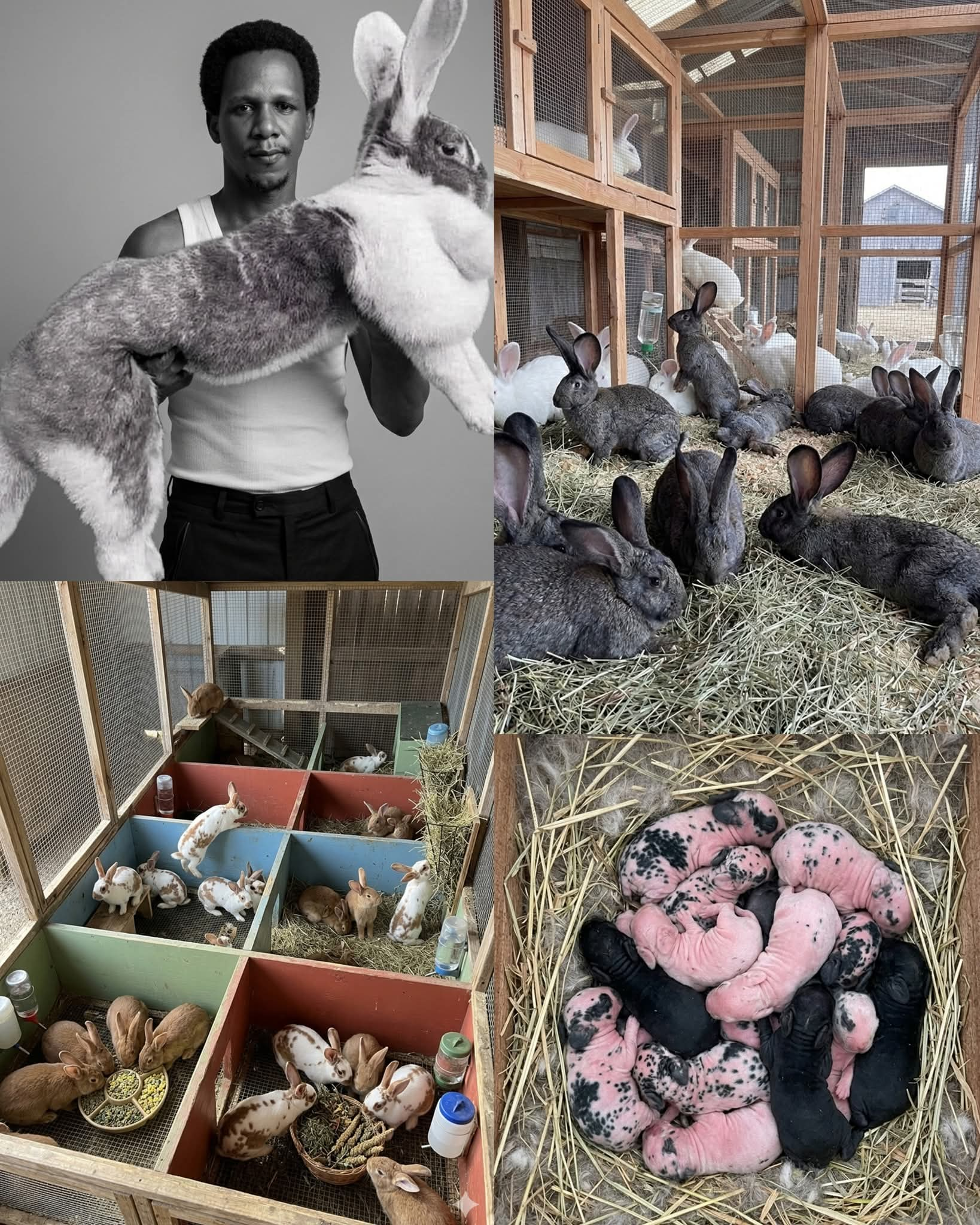
<p>After 15 years of walking through rabbitries across Nigeria and West Africa, I have seen many farmers fail for one specific reason: they focus only on selling meat. In my experience, a <strong>rabbit farming business</strong> is not just about the animal; it is a manufacturing plant for multiple high-value products. From the fur on their backs to the waste they produce, every part of a rabbit can be monetized if you understand the value chain. This guide will move beyond the basics and show you how to turn your backyard rabbitry into a high-revenue commercial enterprise.</p>
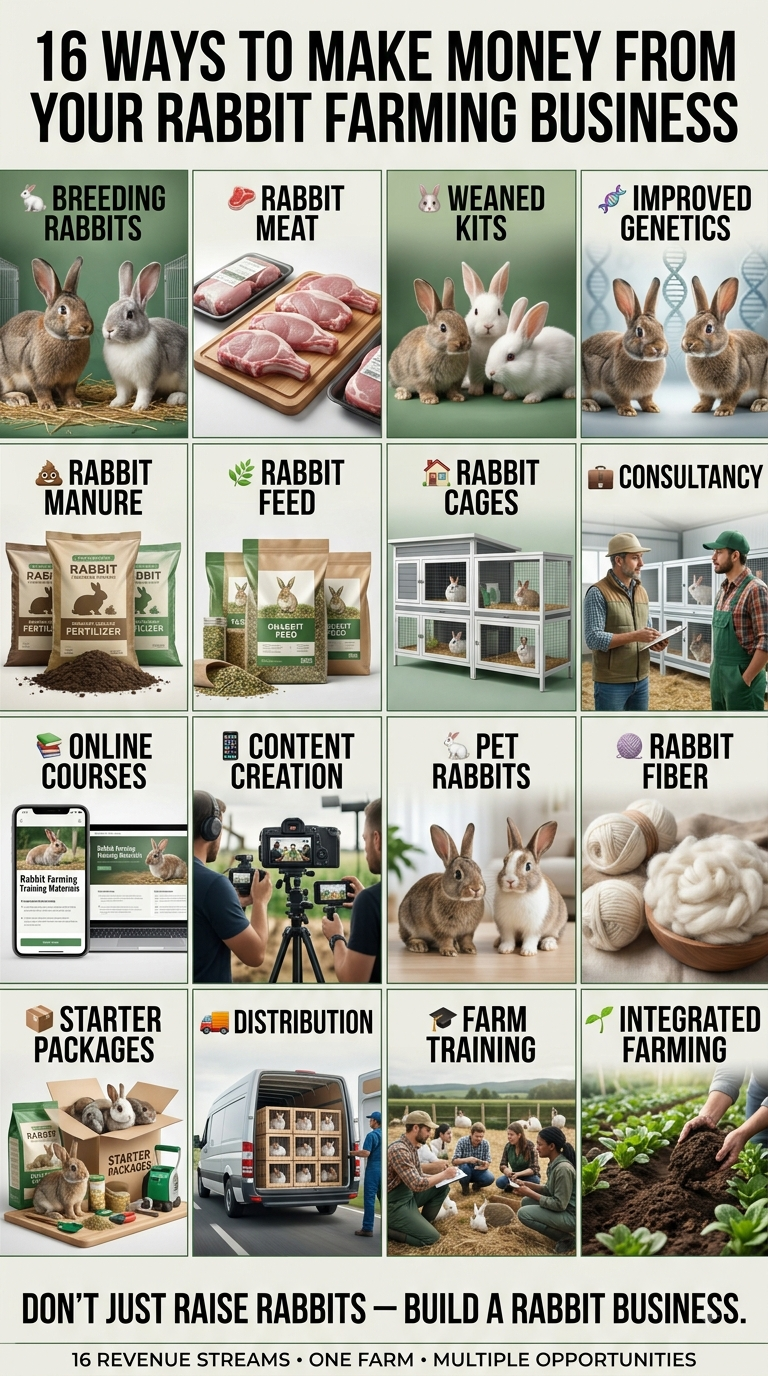
<h2>1. Selling High-Quality Breeding Rabbits</h2>
<p>The foundation of any profitable <strong>rabbit farming business</strong> starts with genetics. In the Nigerian market, breeds like the Hyla, New Zealand White, and Flemish Giant are in high demand. Experienced farmers don't just sell "rabbits"; they sell "pedigreed stock." By keeping records of litter size, weaning weights, and growth rates, you can sell a single breeder buck or doe for 15,000 to 25,000 Naira, which is nearly triple the price of a meat rabbit. Always ensure your breeders are vaccinated against Viral Haemorrhagic Disease (VHD) before sale to build a reputation for quality.</p>
<h2>2. Commercial Rabbit Meat Production</h2>
<p>Rabbit meat is a premium "white meat" known for being low in cholesterol and high in protein. To make money here, you must move beyond occasional sales. Target high-end restaurants, fitness centers, and supermarkets. In my 15 years of field experience, I’ve found that processed and packaged rabbit meat (cut into parts or whole carcasses) sells faster than live animals. The <a href="https://www.fao.org/4/t0690e/t0690e00.htm">Food and Agriculture Organization (FAO)</a> highlights that rabbit meat has one of the highest protein-to-bone ratios among livestock, making it a lucrative choice for health-conscious markets.</p>
<h2>3. Selling Weaned Kits for Grow-Out</h2>
<p>Not every farmer wants to manage the breeding process. You can specialize as a "nursery" where you sell weaned kits (typically at 6–8 weeks old). This allows you to maintain a high turnover rate. By selling kits to other farmers who want to grow them for meat, you reduce your own feeding costs and risk of long-term mortality. For those just starting, I recommend reading our guide on <a href="https://farmtechbusiness.com/blog/how-to-start-rabbit-farming-business-in-nigeria-in-2026-msm45qx4">how to start rabbit farming business in Nigeria in 2026</a> to understand the logistics of nursery management.</p>
<h2>4. Monetizing Improved Genetics and Selection</h2>
<p>If you have the patience to crossbreed and select for specific traits—such as heat tolerance or rapid weight gain—you can command a premium. Farmers are willing to pay for a "line" that reaches 2.5kg in 12 weeks. When selling genetics, provide the buyer with a performance chart. <strong>Mistake to avoid:</strong> Do not inbreed. Always bring in fresh "blood" (unrelated bucks) every 18 months to maintain the vigor of your <strong>rabbit farming business</strong>.</p>
<blockquote>
<strong>Pro Tip:</strong> Use "Cold Manure" Advantage. Unlike poultry droppings, rabbit manure does not need to be aged or "cooled" before application. It can go directly from the hutch to the vegetable bed without burning the plants, making it a favorite for organic urban farmers.
</blockquote>
<h2>5. Selling Rabbit Manure as Organic Fertilizer</h2>
<p>In the world of organic farming, rabbit manure is known as "Black Gold." It is richer in nitrogen, phosphorus, and potassium than cow or horse manure. I have consulted for farms that generate 20% of their revenue solely from selling 50kg bags of dried manure to flower nurseries and vegetable farmers. Research from the <a href="https://edis.ifas.ufl.edu/publication/4H019">University of Florida</a> confirms that rabbit manure contains higher levels of N-P-K than most other livestock manures, making it a premium soil conditioner.</p>
<h2>6. Producing and Selling Rabbit Feed</h2>
<p>One of the biggest expenses in a <strong>rabbit farming business</strong> is commercial pellets. If you have the equipment to mill and pelletize feed, you can create your own brand using locally sourced ingredients like maize bran, soya bean meal, and groundnut haulms. You can also sell processed forage, such as dried Lucerne (Alfalfa) or bagged "Tridax procumbens," which is a staple for rabbits in West Africa.</p>
<h2>7. Designing and Building Rabbit Cages</h2>
<p>There is a massive shortage of quality rabbit housing. Many new farmers use wood, which rabbits chew through, leading to escapes and hygiene issues. If you have welding or carpentry skills, you can sell galvanized wire mesh cages with proper waste drainage systems. A standard 3-tier cage for 6 rabbits can sell for 45,000 to 70,000 Naira depending on the material quality.</p>
<h2>8. Rabbit Farming Consultancy Services</h2>
<p>Once you have 2–3 years of successful records, you can charge for your expertise. Many investors have the capital but lack the technical "know-how." I often charge for farm site inspections, cage layout designs, and health management schedules. <strong>Field Insight:</strong> Always teach your clients about disease prevention, especially how to use Ivermectin (0.2ml per kg) to prevent ear mange, which is the most common ailment in tropical rabbitries.</p>
<h2>9. Selling Rabbit Farming Digital Courses</h2>
<p>You don't have to be physically present to make money. Record your daily farm routines—feeding, palpation for pregnancy, and kit care—and package them into a video course. This allows you to reach an audience across the globe while you focus on your physical farm operations.</p>
<h2>10. Content Creation and Social Media Monetization</h2>
<p>The <strong>rabbit farming business</strong> is highly visual and educational. Start a YouTube channel or a Facebook page. By documenting your successes and even your failures, you build a community. Monetization comes through ad revenue, brand sponsorships from feed companies, and direct sales of your farm products to your followers.</p>
<h2>11. Tapping into the Pet Rabbit Market</h2>
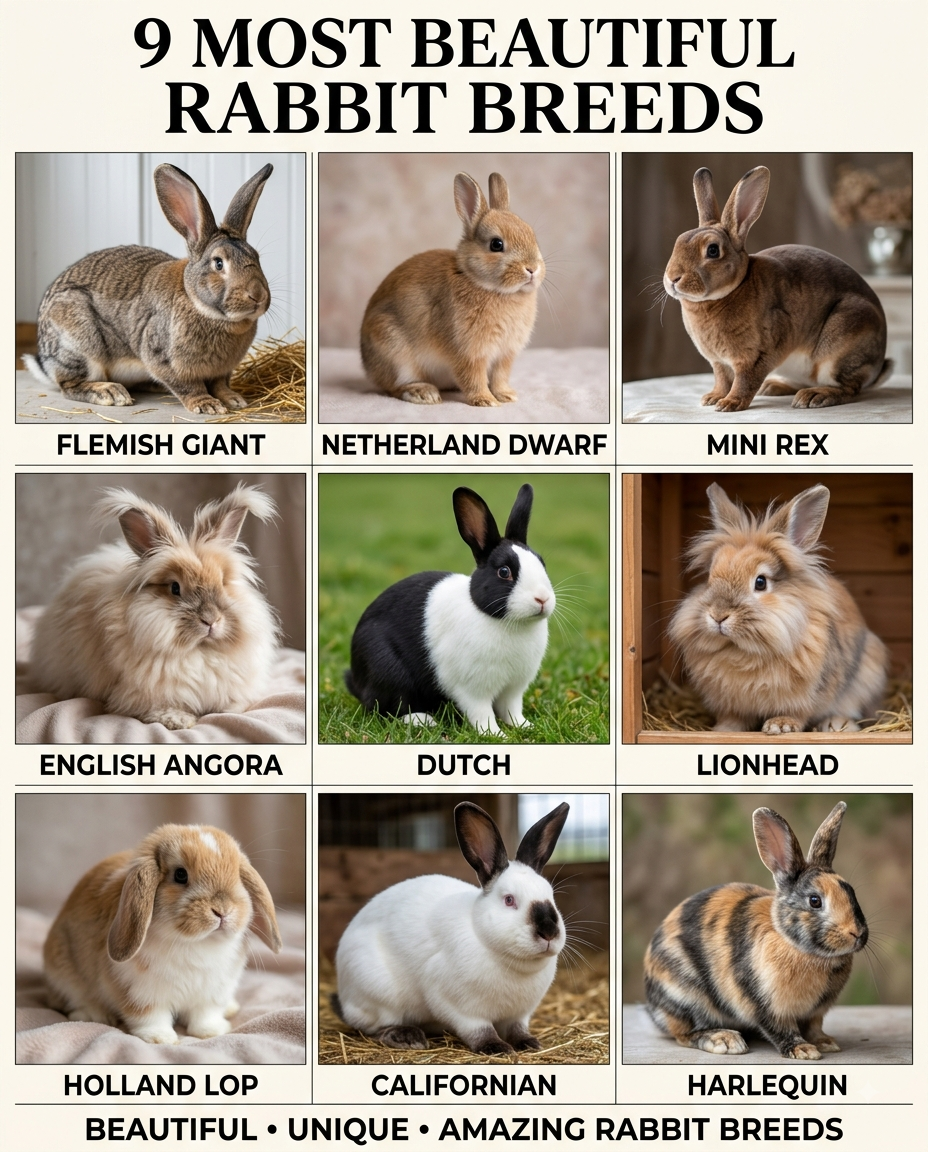
<p>While most of this list focuses on agriculture, the pet industry is booming. Small, "cute" breeds like the Holland Lop or the Lionhead command much higher prices in urban centers like Lagos, Abuja, or Nairobi. A pet rabbit can sell for as much as a meat rabbit but requires less space and feed. To choose the right variety, see our guide on the <a href="https://farmtechbusiness.com/blog/10-best-rabbit-breeds-for-meat-production-a-commercial-guide-msok9q4c">10 best rabbit breeds for meat production</a> vs. those better suited for pets.</p>
<h2>12. Value Addition: Rabbit Fur and Pelts</h2>
<p>While still a niche market in Africa, rabbit fur is used for high-end fashion, hats, and lining for winter clothes exported to colder climates. Breeds like the Rex rabbit have a unique "plush" fur that is highly sought after. If you learn how to cure and tan hides, you can double the value of every rabbit you slaughter.</p>
<h2>13. Selling "Starter Packages"</h2>
<p>This is a brilliant way to help new farmers enter the industry. A starter package could include: 2 pregnant does, 1 mature buck, a 3-hole cage, a bag of feed, and 1 month of mentorship. This "business-in-a-box" approach is easier to sell than individual components because it solves the beginner's problem of "where do I start?"</p>
<h2>14. Aggregation and Distribution</h2>
<p>You don't even need to raise thousands of rabbits to make money. You can become a middleman. Many small-scale farmers struggle to find markets. By acting as an aggregator—buying rabbits from 10 different small farms and supplying a large hotel or meat processing plant—you earn a commission on every kilogram moved.</p>
<h2>15. Hosting Practical Farm Workshops</h2>
<p>Nothing beats hands-on experience. Organize monthly or quarterly training sessions on your farm. Charge a fee for participants to spend a day learning how to handle rabbits, inject medications like Oxytetracycline for respiratory issues, and formulate feed. Provide a certificate of attendance to add value to the session.</p>
<h2>16. Integrating Rabbitry with Crop Production</h2>
<p>This is the ultimate efficiency model. Use your rabbit urine as a potent bio-pesticide and foliar fertilizer. In Nigeria, farmers mix 1 liter of rabbit urine with 5 liters of water to spray on vegetables; it repels insects while providing instant nitrogen. This reduces your cost of crop production, allowing you to sell "organic vegetables" at a premium price alongside your rabbits.</p>
<h3>Summary of Income Streams</h3>
<ul>
<li><strong>Livestock Sales:</strong> Breeders, kits, and pet stock.</li>
<li><strong>Meat & Byproducts:</strong> Processed meat, fur, and tanned hides.</li>
<li><strong>Waste Products:</strong> Manure (solid) and Urine (liquid fertilizer).</li>
<li><strong>Knowledge & Equipment:</strong> Consultancy, cages, training, and digital content.</li>
</ul>
<h2>Conclusion</h2>
<p>A successful <strong>rabbit farming business</strong> is built on diversification. If you rely solely on selling meat, your profit margins will be thin. However, by selling breeding stock, monetizing waste, and sharing your knowledge, you create a resilient business that thrives regardless of market fluctuations. The secret is to start small, keep meticulous records, and treat your farm like a business, not a hobby.</p>
<p><strong>Ready to take your rabbit farming to the next level?</strong> Join the Farming Tech & Business community today. We provide the latest insights into modern agriculture, helping you turn your passion for farming into a profitable enterprise.</p>