Welcome! Who are you? 👇
74
Farmers
9
Tribes
5
Live Listings
📣 Site Admin Akinsuroju Olubunmi just posted on the Timeline ··· 📣 Site Admin Akinsuroju Olubunmi just posted on the Timeline ··· 📣 Ismael Boyi just posted on the Timeline ··· 📣 Site Admin Akinsuroju Olubunmi just posted on the Timeline ··· 📣 Site Admin Akinsuroju Olubunmi just posted on the Timeline ··· 👥 1 new farmers joined today ··· ✅ 3 verified members share this month's ad pool
🔥 For You — Top Posts
🤖 smart-ranked
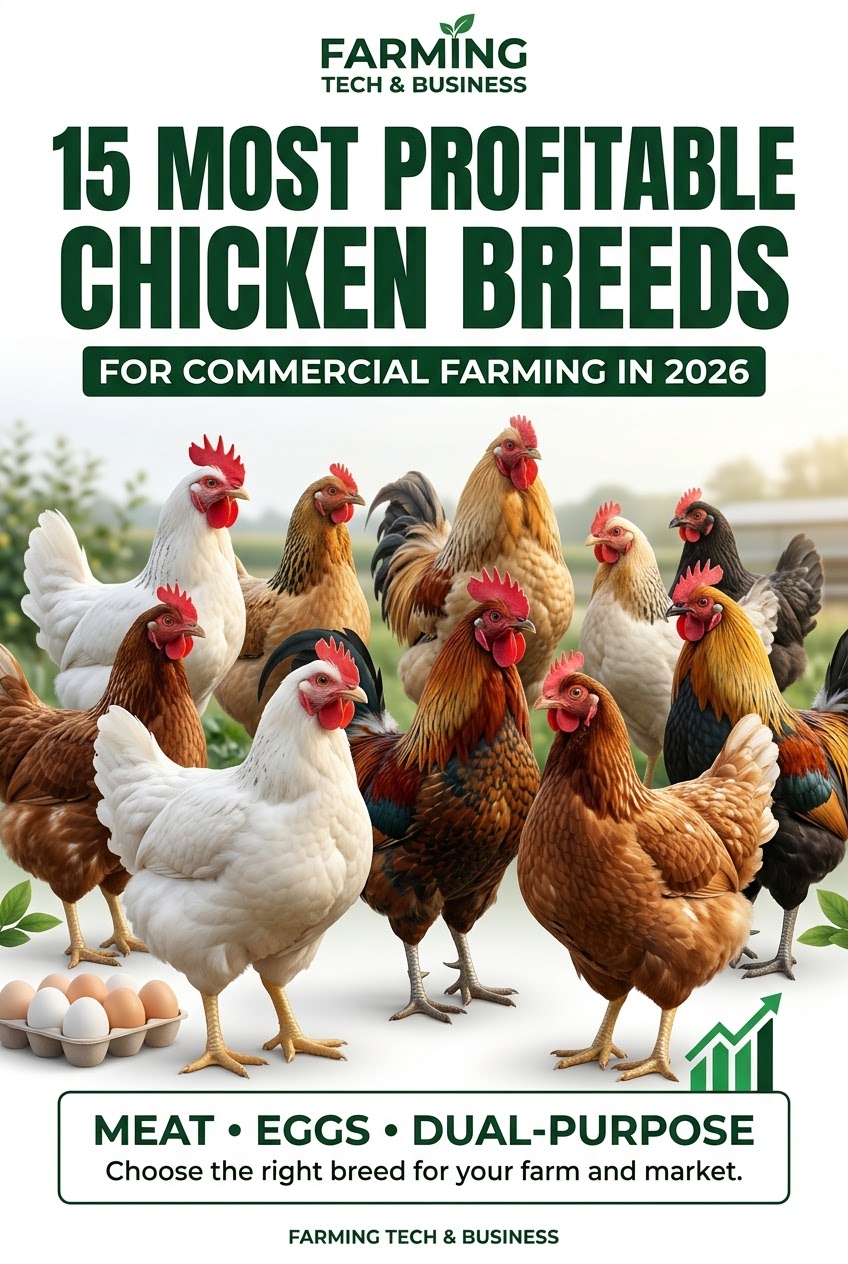
15 Most Profitable Chicken Breeds for Commercial Farming in 2026 Choosing the right chicken breed can determine whether a commercial poultry farm generates consistent profits or struggles with high feed costs, poor productivity, and weak market demand. The most profitable breed depends on its production purpose, feed efficiency, climate adaptability, mortality rate, and the selling price of eggs or meat. For commercial farmers in Africa, Asia, Europe, North America, and South America, the best choice is rarely based on breed reputation alone. A high-performing layer may generate excellent returns in a market with strong egg demand, while a fast-growing broiler may be more profitable where poultry meat sells quickly. Dual-purpose chickens can offer a different advantage for farms serving local markets with limited access to commercial inputs. This article examines 15 commercially relevant chicken breeds and production strains, their performance characteristics, potential applications, and the financial considerations farmers should evaluate before investing in 2026. Important distinction: Commercial poultry producers often use specialized genetic strains rather than traditional breeds. Ross 308, Cobb 500, ISA Brown, and Lohmann Brown, for example, are commercial breeding lines. Their performance figures are generally based on specific management conditions and should not be treated as guaranteed farm results. Introduction: Why Breed Selection Determines Profitability in 2026 Global Poultry Market Outlook for 2026 Poultry remains an important source of affordable animal protein worldwide. Chicken meat and eggs support commercial agriculture, small businesses, food processing, retail distribution, and household nutrition. Demand is supported by several factors: Relatively affordable protein compared with many alternative animal products. Established markets for fresh, frozen, and processed chicken. Growing demand for eggs from households, restaurants, bakeries, and food manufacturers. Opportunities for local production in countries that import significant quantities of poultry products. Improvements in genetics, feed formulation, housing, and disease management. Profitability varies considerably between countries. A farmer in Nigeria may face high feed ingredient prices and expensive day-old chicks, while a producer in Brazil may benefit from a well-developed feed grain and poultry processing industry. Farmers should assess local market conditions rather than assume that global demand automatically produces high farm profits. Egg Production vs. Meat Production Economics Commercial poultry farming generally falls into three categories. 1. Layer farming Layer chickens are bred primarily for egg production. Commercial operations raise young female birds, called pullets, until they approach sexual maturity and begin laying. A point-of-lay pullet is a young female chicken approaching the start of egg production. Layer farms require investment in housing, feeding, water systems, vaccination, and egg handling. Revenue may begin before all birds reach peak production, but meaningful returns depend on flock performance, egg prices, and feed consumption. 2. Broiler farming Broilers are chickens selected for rapid meat production. Commercial broilers can often reach processing weight in approximately 5–7 weeks, depending on genetics, target weight, climate, feed, and management. Their main financial advantage is a relatively short production cycle. Their principal risks include feed price changes, disease outbreaks, mortality, and unstable selling prices. 3. Dual-purpose farming Dual-purpose chickens provide both meat and eggs. They are useful for small commercial farms, rural households, and businesses serving markets that prefer traditional-looking chickens. They generally produce fewer eggs than specialized commercial layers and grow more slowly than modern commercial broilers. Their value may come from selling differentiated products at a premium rather than maximizing biological output. How Climate, Feed Costs, and Local Demand Shape Breed Choice Three factors deserve particular attention. Climate: Heat and humidity can reduce feed intake, growth, egg production, and fertility. Heat-tolerant genetic lines and suitable housing can help reduce these losses. Feed costs: Feed commonly represents the largest variable production expense in commercial poultry farming. A breed that converts feed efficiently can have a substantial economic advantage. Market demand: Farmers must establish whether buyers prefer white eggs, brown eggs, large table eggs, heavy broilers, or traditional chickens before selecting a production system. The best breed is the one that produces the most valuable marketable output at an acceptable cost under the farmer's actual conditions. How We Ranked the 15 Most Profitable Breeds This ranking considers commercial usefulness rather than claiming that every bird has the same profitability worldwide. Profitability Criteria The following factors influence the ranking: Egg output: Number of eggs produced over a laying cycle. Meat production: Growth rate and market weight. Feed conversion ratio (FCR): The quantity of feed required to produce a unit of output. For broilers, it is commonly expressed as kilograms of feed per kilogram of live-weight gain. Mortality: The proportion of birds that die during production. Climate adaptability: Performance under local temperature and humidity conditions. Disease management: Health risks, vaccination requirements, and the effectiveness of farm biosecurity. Market maturity: Availability of buyers, processors, distributors, and established production systems. Chick availability: Access to reliable hatcheries and genuine commercial genetics. Data Sources and Assumptions Performance estimates should be checked against breeder management guides, national agricultural research institutions, veterinary authorities, and local production records. Useful technical resources include: Aviagen� for Ross broiler genetics and management. Cobb-Vantress� for commercial broiler performance and management. Hendrix Genetics� for poultry breeding and genetic solutions. Lohmann Breeders� for layer performance guides. FAO� for global agricultural and livestock information. There is no single reliable global average for poultry feed prices, egg prices, or live-bird prices. These vary by country, season, feed ingredients, currency, production system, and market channel. The financial scenarios later in this article therefore use explicitly stated illustrative assumptions. They are planning examples, not current market quotations or guaranteed returns. The 15 Most Profitable Chicken Breeds for Commercial Farming 1. Ross 308: A Leading Commercial Broiler Primary purpose: Meat production. Ross 308 is a widely used commercial broiler line selected for rapid growth, efficient feed conversion, and high meat yield. Its established breeding and production system makes it suitable for large integrated poultry businesses and smaller farms with access to quality chicks and feed. Key profitability drivers Rapid growth under appropriate management. Strong meat-production potential. Established commercial feeding and management guidance. Suitability for processing plants and fresh-chicken markets. Commercial performance depends on stocking density, ventilation, feed quality, water availability, and health management. Typical performance: Approximately 35–49 days to market, depending on target weight and production conditions. Feed conversion can be around 1.5–1.9 kg of feed per kilogram of live-weight gain in well-managed flocks, although actual results vary. Regional suitability: Suitable for many temperate and tropical markets when housing, ventilation, and cooling meet the birds' needs. Profit potential: High in operations that maintain low mortality, efficient feed conversion, and reliable sales. Practical example: A farm placing 5,000 Ross 308 chicks could plan for approximately 4,750 saleable birds if mortality reaches 5%. At an average sale weight of 2.2 kg, this represents 10,450 kg of live-weight output. Revenue depends on the selling price per kilogram, feed costs, and other production expenses. 2. Cobb 500: Efficient Meat Production Primary purpose: Meat production. Cobb 500 is another major commercial broiler line. It is widely used in operations seeking efficient feed use and competitive meat production costs. Key profitability drivers Strong growth potential. Efficient conversion of feed into body weight. Established management recommendations. Suitability for commercial processing and live-bird markets. Typical performance: Approximately 35–49 days to market, with feed conversion often falling around 1.5–1.9 under suitable conditions. These figures are indicative, not guaranteed performance standards. Regional suitability: Widely applicable across commercial poultry markets with adequate feed, housing, and veterinary support. Profit potential: High where feed efficiency, chick quality, and market access are strong. Practical example: A producer placing 10,000 chicks could target a saleable flock of 9,500 birds at 5% mortality. If the average sale weight is 2.3 kg, the farm would market 21,850 kg of live weight. The producer should compare the final cost per kilogram with local wholesale prices before choosing this line. 3. Hubbard: A Versatile Commercial Broiler Line Primary purpose: Meat production. Hubbard supplies broiler genetics used in different commercial production systems. Available lines have different performance characteristics, so the exact strain matters. Key profitability drivers Access to commercial broiler genetics. Performance options suited to different production goals. Potential for efficient meat production. Established technical management resources. Typical performance: Many conventional commercial Hubbard broilers are marketed within approximately 35–49 days, depending on strain and target weight. Regional suitability: Appropriate for regions with reliable hatchery supply and the ability to maintain suitable broiler housing conditions. Profit potential: Potentially high, but the specific genetic line and local chick price must be evaluated. Practical example: A 3,000-bird operation could compare the supplier's projected feed consumption and market weight against those of Ross 308 and Cobb 500. The farmer should select the line with the lowest expected cost per kilogram of saleable meat, not simply the fastest projected growth. 4. Arbor Acres: Commercial Meat Production Primary purpose: Meat production. Arbor Acres is a commercial broiler line used in conventional poultry production. Its commercial value comes from its potential for rapid growth, meat yield, and efficient feed use. Key profitability drivers Commercially established genetics. Performance under structured feeding programs. Suitability for broiler processors. Access to breed-specific management information. Typical performance: Approximately 35–49 days to market in many conventional production systems, depending on the target weight and environment. Regional suitability: Suitable for many commercial markets where genuine chicks and technical support are available. Profit potential: High when the farm can achieve competitive feed conversion and secure reliable buyers. Practical example: A 4,000-chick farm can budget for chick purchases, feed, vaccination, heating, electricity, litter, labour, and transport. The operation should compare the projected margin per bird with that of other locally available commercial broiler lines. 5. Indian River: A Commercial Broiler Option Primary purpose: Meat production. Indian River is a commercial broiler breeding line associated with established international poultry production. Key profitability drivers Meat-production genetics. Access to commercial broiler management systems. Potential for competitive feed efficiency. Suitability for conventional meat markets. Typical performance: Market age commonly falls within approximately 35–49 days, depending on the strain, market weight, and production environment. Regional suitability: Relevant to markets with access to genuine chicks and suitable production infrastructure. Profit potential: Potentially high, subject to the cost of chicks, feed, and market access. Practical example: A producer planning 6,000 birds can obtain the supplier's performance objectives and estimate expected feed consumption. A trial flock can then establish actual mortality, feed conversion, and sale weight before the producer expands. 6. ISA Brown: A Commercial Egg-Laying Line Primary purpose: Egg production. ISA Brown is a widely recognised commercial layer line developed for sustained egg production under appropriate management. Key profitability drivers High egg-production potential. Established commercial layer management guidance. Strong suitability for table-egg markets. Potential for predictable production when flock management is consistent. Typical performance: Commercial targets can approach or exceed 300 eggs per hen housed over a production cycle, depending on cycle length, management, and the performance standard used. Feed consumption is commonly around 105–120 grams per bird daily under suitable commercial conditions, though temperature, egg mass, and production stage affect intake. Regional suitability: Suitable for tropical and temperate regions with appropriate ventilation, feeding, lighting, and disease prevention. Profit potential: High in markets with dependable egg demand and controlled feed costs. Practical example: A farm starting with 5,000 point-of-lay ISA Brown pullets could model an average of 4,500 eggs per day at 90% laying production. Actual output would fluctuate throughout the laying cycle. At a selling price of $0.12 per egg, 4,500 eggs would generate $540 in daily gross egg revenue. Feed and other operating costs must be deducted. 7. Lohmann Brown: Reliable Brown Egg Production Primary purpose: Egg production. Lohmann Brown is a commercial layer line known for productive brown-egg flocks. Key profitability drivers Strong laying potential. Commercial egg size and shell quality. Established feeding and management guidance. Suitability for retail and wholesale egg markets. Typical performance: Production targets can exceed 300 eggs per hen housed over a production cycle, depending on the line, management, and duration of lay. Regional suitability: Suitable for commercial egg farms in many climates when heat stress, lighting, feed, and health are properly managed. Profit potential: High where egg demand is strong and the farm can control production costs. Practical example: A farm with 2,000 Lohmann Brown hens producing 90% of their potential daily output would collect approximately 1,800 eggs per day. If 3% are unsaleable, approximately 1,746 eggs remain for sale. At $0.12 per saleable egg, gross daily revenue would be $209.52 before feed, labour, housing, packaging, and other expenses. 8. Hy-Line Brown: Commercial Egg Production Primary purpose: Egg production. Hy-Line Brown is a commercial layer line used by egg producers in many markets. Key profitability drivers High laying potential. Commercially established production guidance. Potential for efficient feed use per unit of egg mass. Suitability for organised egg collection and distribution. Typical performance: Production targets can exceed 300 eggs per hen housed over a commercial production cycle, depending on the line and management. Regional suitability: Suitable for many temperate and tropical egg-production systems with appropriate housing and nutrition. Profit potential: High where the farm maintains consistent egg quality and controls feed expenses. Practical example: A 3,000-hen farm operating at 92% laying production would produce about 2,760 eggs daily before accounting for cracked, dirty, or otherwise unsaleable eggs. The farm can compare its feed cost per dozen saleable eggs with competing layer systems. 9. Bovans Brown: A Commercial Brown Layer Primary purpose: Egg production. Bovans Brown is a commercial layer line bred for table-egg production. Key profitability drivers Commercial laying potential. Established production and feeding guidance. Suitability for conventional brown-egg markets. Potential for efficient egg production. Typical performance: Commercial production targets can reach approximately 300 or more eggs per hen housed over a production cycle, depending on the genetic line and management system. Regional suitability: Appropriate for markets with reliable chick supply and suitable layer facilities. Profit potential: High when feed, egg grading, mortality, and distribution costs are well managed. Practical example: A 5,000-hen farm could compare Bovans Brown with ISA Brown and Lohmann Brown under the same housing and feed conditions. The most profitable line would be the one producing the greatest contribution margin per hen housed, not necessarily the most eggs on paper. 10. White Leghorn: Efficient White-Egg Production Primary purpose: Egg production. White Leghorns and their commercial derivatives are known for white eggs and relatively light body weight. Specialised commercial white-layer strains can be highly productive, although performance differs between traditional White Leghorns and modern selected lines. Key profitability drivers Strong laying potential in selected lines. Relatively low body weight. Suitability for white-egg markets. Potentially efficient feed use per unit of egg output. Typical performance: Modern commercial white-layer strains may exceed 300 eggs per hen housed over a production cycle under suitable management. Regional suitability: Particularly relevant where white eggs are preferred and commercial white-layer genetics are available. Profit potential: High in suitable markets, but lower where consumers strongly prefer brown eggs and pay a premium for them. Practical example: A producer with 4,000 white layers can compare feed expenditure and saleable egg output against a brown-layer flock. If local buyers pay the same price for white and brown eggs, the producer can focus on cost per dozen and production consistency. 11. Sasso: Improved Chickens for Meat and Egg Production Primary purpose: Dual-purpose or specialised meat production, depending on the line. Sasso is associated with improved coloured chicken genetics used in alternative poultry production systems. Certain lines are marketed toward farmers seeking birds that can perform in semi-intensive systems, but their growth and laying characteristics vary. Key profitability drivers Potential suitability for differentiated chicken markets. Availability of selected lines for different production goals. Possible advantages in systems that value outdoor access or coloured plumage. Opportunity to serve consumers seeking alternatives to conventional white broilers. Typical performance: Growth to market weight varies considerably by line and management. Some meat-oriented lines require substantially longer than conventional commercial broilers. Regional suitability: Potentially useful in tropical and subtropical markets where consumers value coloured birds and alternative production systems. Profit potential: Moderate to high where consumers pay enough to offset longer production time and feed costs. Practical example: A small farm placing 1,000 Sasso-type birds can compare the additional feed required with the premium received for each finished bird. The system is financially attractive only if the additional selling price exceeds the additional production cost. 12. Kuroiler: Improved Poultry for Smallholder Systems Primary purpose: Dual-purpose production. Kuroiler chickens have been promoted in smallholder poultry systems, particularly in parts of South Asia and Africa. Their commercial appeal comes from their potential to produce both meat and eggs in systems that may not resemble intensive industrial poultry farms. Key profitability drivers Suitability for certain semi-intensive systems. Opportunity to sell both eggs and birds. Potential fit with local consumer preferences. Reduced dependence on a single source of revenue. Typical performance: Egg production and growth depend on the specific stock, nutrition, housing, and health management. They should not be assumed to match specialised commercial layers or broilers. Regional suitability: Particularly relevant to selected smallholder markets in Africa and South Asia where reliable stock and management support are available. Profit potential: Moderate to high where the birds have a strong market and input requirements fit the farm's resources. Practical example: A farmer raising 500 Kuroilers could sell mature males for meat while retaining suitable females for egg production. This diversified model may suit local markets better than a specialised commercial system, but income depends on actual production and sale prices. 13. Noiler: Improved Dual-Purpose Poultry Primary purpose: Dual-purpose production. Noiler is an improved chicken type developed for meat and egg production, with relevance to Nigerian and other African smallholder poultry systems. Key profitability drivers Potential suitability for tropical production systems. Opportunity to sell birds and eggs. Market familiarity in some African regions. Potential fit for small and medium-scale enterprises. Typical performance: Growth and egg production depend on stock quality, management, nutrition, and the production objective. Noiler performance should be evaluated using supplier documentation and farm records. Regional suitability: Particularly relevant to Nigerian farmers and other tropical markets where genuine stock is available. Profit potential: Moderate to high when production costs align with local prices for improved chickens and eggs. Practical example: A Nigerian farmer starting with 500 Noiler chicks could divide the flock into a meat-sales group and a replacement-female group. Before scaling up, the farmer should calculate feed consumption per saleable bird and compare the returns with those from indigenous chickens and commercial broilers. 14. Jersey Giant: A Large Heritage Chicken Primary purpose: Dual-purpose production, with meat as a potential focus. The Jersey Giant is a large heritage breed originally developed in the United States. Its size can make it attractive for niche meat markets, heritage poultry businesses, and specialist breeders. Key profitability drivers Large adult body size. Potential market appeal for heritage poultry. Value for breeding stock in specialist markets. Distinctive characteristics that differentiate it from commercial hybrids. Typical performance: It generally grows more slowly than modern commercial broilers. Production time depends on the intended market weight and management system. Regional suitability: Suitable for specialist markets where customers value heritage birds and production time can be accommodated. Profit potential: Usually more dependent on premium pricing than on maximum growth speed or feed efficiency. Practical example: A breeder raising 200 Jersey Giants could sell breeding-quality birds, hatching eggs, and selected meat birds. The business should evaluate breeding-stock demand separately from ordinary table-chicken demand. 15. Nigerian Indigenous Chickens: Local Adaptation and Niche Markets Primary purpose: Dual-purpose production. Nigerian indigenous chickens include diverse local populations with characteristics shaped by long-term adaptation and breeding. They are not one uniform breed, so growth, egg production, colour, and other traits vary between populations. Key profitability drivers Local consumer familiarity. Potential suitability for traditional production systems. Opportunities for premium-priced native chicken meat. Possible fit with lower-input or semi-intensive systems. Typical performance: Indigenous chickens generally grow more slowly and produce fewer eggs than specialised commercial hybrids. Actual performance depends on the population, nutrition, health, and management. Regional suitability: Particularly relevant to Nigeria and other West African markets where local chickens have established consumer demand. Profit potential: Moderate to high in niche markets that reward traditional birds, although slow growth can increase production costs. Practical example: A farmer raising 300 indigenous chickens could focus on direct sales to households, restaurants, and specialist food retailers. The farmer should calculate the cost of feed and labour over the longer production period before setting prices. Side-by-Side Profitability Comparison Table The following table provides a broad commercial comparison. Figures are indicative ranges rather than guarantees, and the exact genetic line can materially change results. Breed or line Primary purpose Indicative production period or output Typical FCR or feed consideration Climate suitability Market readiness Relative profitability Ross 308 Broiler 35–49 days Approximately 1.5–1.9 Wide, with suitable housing High in established broiler markets High Cobb 500 Broiler 35–49 days Approximately 1.5–1.9 Wide, with suitable housing High High Hubbard Broiler 35–49 days for many conventional lines Line-specific Wide Depends on local supply High Arbor Acres Broiler 35–49 days Line-specific Wide Established in selected markets High Indian River Broiler 35–49 days Line-specific Wide Depends on hatchery access High ISA Brown Layer 300+ eggs possible per production cycle Roughly 105–120 g feed/bird/day Wide, with heat management High in brown-egg markets High Lohmann Brown Layer 300+ eggs possible per production cycle Roughly 105–120 g/day Wide High in established markets High Hy-Line Brown Layer 300+ eggs possible per production cycle Roughly 105–120 g/day Wide High in established markets High Bovans Brown Layer 300+ eggs possible per production cycle Roughly 105–120 g/day Wide Depends on stock availability High White Leghorn Layer 300+ eggs possible in selected commercial lines Line-specific Wide, with suitable management High in white-egg markets High Sasso Dual-purpose or meat Line-dependent Generally less specialised than leading broilers Suitable lines for tropical systems Regional Moderate–high Kuroiler Dual-purpose Line-dependent Management-dependent Selected tropical and subtropical systems Regional Moderate–high Noiler Dual-purpose Line-dependent Management-dependent Particularly relevant to tropical systems Regional Moderate–high Jersey Giant Heritage dual-purpose Longer growth period Less specialised than modern broilers Depends on housing and climate Niche markets Niche-dependent Nigerian indigenous chickens Dual-purpose Longer growth and variable laying Highly variable Locally adapted populations Established local markets Niche-dependent Important: The relative-profitability ratings indicate commercial potential, not measured universal profit rankings. A local financial model is necessary before making an investment decision. Regional Considerations for Breed Selection Tropical and Humid Regions Examples include West Africa, Southeast Asia, and northern South America. High temperatures and humidity can reduce feed intake, slow growth, affect egg production, and increase health risks. Recommended approaches include: Ross 308, Cobb 500, or other available commercial broilers where efficient meat production is the objective. ISA Brown, Lohmann Brown, or other locally supported commercial layers for egg production. Noiler, suitable Sasso lines, Kuroiler, or indigenous chickens where differentiated meat and egg markets support their production costs. Practical recommendation: Invest in ventilation, reliable water supplies, shade, appropriate stocking density, and locally suitable feed. Genetic selection alone cannot compensate for severe heat stress. Temperate Regions Examples include parts of Western Europe, North America, and northern China. These regions often have established hatcheries, processing plants, commercial feed suppliers, and organised egg distribution. Recommended options include: Ross 308, Cobb 500, and other established broiler lines for meat. ISA Brown, Lohmann Brown, Hy-Line Brown, and White Leghorn derivatives for eggs. Jersey Giant and other heritage breeds for specialist markets. Practical recommendation: Evaluate feed conversion, processing specifications, labour costs, animal welfare requirements, and contractual selling prices. Arid and Semi-Arid Regions Examples include parts of East Africa, the Middle East, and Australia. Heat, water availability, feed logistics, and cooling costs can strongly influence profitability. Recommended options include: Commercial broilers where reliable cooling and water systems are available. Commercial layer lines with appropriate heat-management facilities. Locally adapted indigenous populations or suitable improved dual-purpose chickens where their market value justifies their production period. Practical recommendation: Calculate the cost of water, electricity, cooling, transport, and feed storage before selecting a production system. A bird that performs well under ideal conditions may become uneconomical where cooling and feed logistics are expensive. Practical Example: Layer Farm Profit Model Consider a commercial farm starting with 5,000 point-of-lay pullets. The following figures are illustrative assumptions expressed in US dollars. They are not current market quotations and should be replaced with local prices. Step 1: Establish Production Assumptions Assume: Starting flock: 5,000 hens. Average laying rate: 90%. Saleable egg proportion: 97%. Feed consumption: 115 grams per hen per day. Feed price: $0.40 per kilogram. Sale price: $0.12 per saleable egg. Daily egg production: 5,000 × 90% = 4,500 eggs. Saleable eggs: 4,500 × 97% = 4,365 eggs. Daily gross revenue: 4,365 × $0.12 = $523.80. Step 2: Calculate Daily Feed Costs Daily feed consumption: 5,000 × 0.115 kg = 575 kg. Daily feed cost: 575 kg × $0.40 = $230. Step 3: Estimate Other Daily Operating Costs Assume the farm allocates the following amounts per day: Expense Illustrative daily cost Feed $230.00 Labour $40.00 Packaging and egg handling $25.00 Veterinary care and medication $10.00 Electricity and water $15.00 Transport and distribution $20.00 Repairs and miscellaneous costs $10.00 Total daily operating costs $350.00 Step 4: Estimate Daily Operating Margin Gross revenue: $523.80. Operating costs: $350.00. Estimated daily operating margin: $173.80. This equals approximately $5,214 over 30 days if the assumed production, prices, and costs remain unchanged. This is an operating estimate, not net profit. It excludes or may inadequately account for pullet purchase costs, housing depreciation, financing, taxes, replacement birds, manure revenue, spent-hen sales, and fluctuations in production. Step 5: Examine Feed Efficiency Suppose a competing layer flock consumes 110 grams rather than 115 grams per bird per day, while producing the same number of saleable eggs. Daily feed consumption would be: 5,000 × 0.110 kg = 550 kg. Daily feed cost: 550 × $0.40 = $220. The saving would be $10 per day, or approximately $300 over 30 days. This comparison illustrates why feed consumption matters, but the assumed difference must be verified through actual flock records. A lower feed intake is not automatically better if it reduces egg production, egg size, or bird health. Practical Example: Broiler Operation Profit Model Consider a farm placing 10,000 commercial broiler chicks. All prices below are illustrative. Step 1: Establish Production Assumptions Assume: Chicks placed: 10,000. Mortality: 5%. Birds sold: 9,500. Average live weight: 2.3 kg. FCR: 1.7. Day-old chick cost: $0.60. Feed price: $0.40 per kilogram. Selling price: $2.00 per kilogram of live weight. Step 2: Calculate Saleable Output Saleable birds: 10,000 × 95% = 9,500 birds. Total live weight: 9,500 × 2.3 kg = 21,850 kg. Step 3: Estimate Feed Requirements For a simplified model, assume the flock achieves a feed conversion ratio of 1.7 based on live-weight gain and uses approximately 1.7 kg of feed per kilogram of live weight marketed. Estimated feed requirement: 21,850 × 1.7 = 37,145 kg. Actual feed requirements should be calculated using the chosen breeder's performance standard and the flock's actual starting weight, feed intake, mortality, and production records. Feed cost: 37,145 × $0.40 = $14,858. Step 4: Calculate Revenue Live-weight revenue: 21,850 kg × $2.00 = $43,700. Step 5: Estimate Production Costs Expense Illustrative cost Day-old chicks $6,000 Feed $14,858 Vaccination and veterinary care $800 Labour $1,000 Litter, heating, and electricity $1,200 Processing and transport $2,000 Miscellaneous expenses $500 Total costs $26,358 Estimated operating margin: $43,700 − $26,358 = $17,342 per cycle. This is a simplified illustrative result, not a prediction of commercial profit. The model does not fully account for housing depreciation, financing, taxes, equipment replacement, working-capital costs, or the effect of selling processed birds rather than live birds. It also assumes that the processing and transport cost is compatible with the stated live-weight selling price; in an actual farm budget, costs and revenue must be matched to the same marketing channel to avoid double-counting. Step 6: Test a Less Favourable Market If the selling price falls from $2.00 to $1.40 per kilogram, revenue becomes: 21,850 × $1.40 = $30,590. With costs unchanged, the estimated operating margin falls to $4,232. This illustrates how quickly a broiler farm's returns can decline when selling prices weaken. Financial lesson: Breed selection matters, but market price, feed price, mortality, and production efficiency can have a greater effect on actual profitability than the breed name alone. Disease Resistance and Risk Management by Breed No commercial chicken breed is immune to major poultry diseases. Some genetic lines or populations may show differences in resilience, but these differences do not replace vaccination, biosecurity, sanitation, and veterinary supervision. Common Commercial Poultry Diseases Newcastle disease: Can cause respiratory, digestive, or nervous-system signs and severe mortality. Infectious bursal disease: Can damage immune function, increasing vulnerability to other infections. Marek's disease: Can cause tumours, paralysis, and production losses. Avian influenza: Some forms can cause severe outbreaks and substantial mortality. Coccidiosis: An intestinal parasitic disease that can reduce growth and feed efficiency. Infectious bronchitis: Can affect respiratory health, egg production, and egg quality. Disease patterns vary by location, so local veterinary guidance should determine the vaccination and monitoring programme. Do Some Breeds Have Better Disease Resistance? Local chicken populations may possess useful adaptations to particular environmental conditions or disease pressures. However, performance varies between populations, and no general claim of universal disease resistance is justified for indigenous chickens, Noilers, Sasso lines, or commercial hybrids. Modern commercial strains are selected for productivity and other traits, but their health still depends on genetics, management, nutrition, housing, and exposure to pathogens. Biosecurity Measures That Protect Profitability Farmers should implement: Controlled visitor access. Cleaning and disinfection of equipment. Reliable vaccination programmes. Safe drinking water and appropriate feed storage. Rodent and insect control. Separation of sick birds. Proper disposal of dead birds. Routine flock monitoring and accurate mortality records. Veterinary investigation of unusual illness or sudden mortality. Biosecurity reduces the likelihood of costly disease outbreaks and helps protect both production and market access. Future Trends in Commercial Poultry Breeding (2026–2030) 1. Better Feed Efficiency Breeding programmes continue to pursue improved feed conversion, growth, egg output, and robustness. Small improvements can produce meaningful savings across large commercial flocks. Farmers should compare performance under similar production conditions rather than relying on promotional claims. 2. Climate-Resilient Genetics Heat tolerance, resilience, and adaptability are likely to remain important breeding priorities as poultry producers respond to rising temperatures and variable weather. Breeding is only one part of the solution. Housing design, ventilation, cooling, water availability, and feeding schedules also affect performance. 3. Alternative Feed Ingredients Research into insect protein, food-processing by-products, and other alternative ingredients may create opportunities to reduce dependence on conventional feed ingredients. Any alternative ingredient must meet appropriate nutritional, safety, regulatory, and cost requirements. It should not be assumed to improve performance simply because it is cheaper. 4. Precision Poultry Farming Sensors, automated feeding, environmental monitoring, and data analysis can help farmers identify production problems earlier. Useful measurements include: Daily feed consumption. Water consumption. Mortality. Body weight. Egg production. Temperature and humidity. Feed conversion. Cost per kilogram of meat or dozen eggs. These measurements allow producers to compare genetic lines using actual commercial results. 5. Demand for Differentiated Poultry Products Some markets reward organic, free-range, heritage, locally adapted, or specialty poultry products. These markets may offer premium prices, but higher production costs, certification requirements, longer growing periods, and limited demand can reduce the advantage. Farmers should confirm buyer demand before investing in a specialised breed or production system. Conclusion The most profitable chicken breeds for commercial farming in 2026 depend on the production objective, local climate, feed prices, chick availability, and market demand. For specialised meat production, Ross 308, Cobb 500, Hubbard, Arbor Acres, and Indian River are commercial lines worth evaluating where genuine stock and technical support are available. For egg production, ISA Brown, Lohmann Brown, Hy-Line Brown, Bovans Brown, and commercial White Leghorn lines offer established production options. For alternative and dual-purpose systems, Sasso, Kuroiler, Noiler, Jersey Giant, and Nigerian indigenous chickens may suit particular markets and production methods. The most reliable investment decision comes from comparing the total cost of production with the value of saleable output. Farmers should request current breeder performance guides, verify local chick prices, conduct a realistic financial analysis, and maintain detailed flock records. A breed that performs well in one country may be less profitable in another. The best commercial choice is the one that fits the farmer's resources and consistently meets the needs of the intended market. Meta description: Discover 15 profitable chicken breeds for commercial farming in 2026, with egg output, growth rates, feed efficiency, climate suitability, and profit models. Suggested URL slug: 15-most-profitable-chicken-breeds-commercial-farming-2026
🪱🌱 HOW TO START INSECT FARMING: A BEGINNER'S GUIDE Did you know you can start an agricultural business by farming insects? Insect farming is becoming an interesting opportunity for poultry farmers, fish farmers and agricultural entrepreneurs. From Black Soldier Fly Larvae (BSFL) to mealworms, farmed insects can provide valuable protein ingredients for animal feed while helping convert suitable organic materials into useful agricultural products. But how do you actually start? Here are 7 practical steps to starting your own insect farm. 👇 1️⃣ CHOOSE THE RIGHT INSECT Start by deciding what you want to produce. Popular options include: 🪱 Black Soldier Fly Larvae (BSFL) 🪱 Mealworms 🪱 Other suitable insect species Your choice should depend on your available resources, production goals and market demand. 2️⃣ IDENTIFY YOUR MARKET Before investing in equipment, identify potential buyers. Your customers may include: 🐔 Poultry farmers 🐟 Fish farmers 🐄 Livestock farmers 🌾 Feed manufacturers 🪱 Other insect farmers Find out whether they prefer live insects, dried larvae, insect meal or breeding stock. 3️⃣ PREPARE YOUR FARMING SPACE You do not necessarily need a large building. A small, properly managed production area may be enough to begin experimenting. Your space should provide: ✅ Good ventilation ✅ Suitable temperature and moisture ✅ Protection from predators ✅ Easy cleaning ✅ Proper drainage where necessary 4️⃣ GET HEALTHY STARTER STOCK Obtain eggs, larvae or breeding insects from a reliable source. Learn the life cycle of your chosen insect so you understand when to feed, harvest, separate stages and maintain a breeding colony. 5️⃣ PROVIDE SUITABLE FEED Different insects have different feeding requirements. Depending on the species, suitable substrates may include agricultural by-products, vegetable residues and approved food-processing materials. ⚠️ Not all organic waste is safe for insect production, especially when the insects will be used as animal feed. 6️⃣ MAINTAIN PROPER FARM MANAGEMENT Monitor your insects regularly. Pay attention to: 🌡️ Temperature 💧 Moisture 🌬️ Ventilation 🧹 Hygiene 🍽️ Feeding 📈 Growth and mortality Poor management can lead to slow growth, bad odour, contamination and high mortality. 7️⃣ START SMALL AND SCALE GRADUALLY Do not rush to establish a large insect farm. Start with a manageable production system. Learn how to maintain the colony, calculate production costs, harvest properly and identify reliable customers. Once production becomes consistent and the business makes economic sense, you can expand. 🪱 THE BIG OPPORTUNITY IN INSECT FARMING Insect farming can create opportunities in: 🐔 Poultry feed production 🐟 Fish feed production 🌱 Organic resource utilization 🪱 Breeding-stock sales 🌾 Agricultural entrepreneurship However, profitability depends on production efficiency, feed costs, product quality and market demand. 📘 WANT TO LEARN INSECT FARMING IN MORE DETAIL? If you are interested in starting your own insect farm but do not know where to begin, our COMPLETE INSECT FARMING GUIDE is designed to help you understand the practical fundamentals. Learn about: ✅ Insect farming setup ✅ Understanding insect life cycles ✅ Feeding and production management ✅ Harvesting and processing ✅ Insect farming business opportunities ✅ Using insect protein in livestock feeding 👉 Get your Insect Farming Guide here: https://selar.com/038174 Start learning today and explore how insect farming can become another valuable opportunity in your agricultural business. #InsectFarming #BlackSoldierFlyLarvae #MealwormFarming #Agribusiness #PoultryFarming
🧼🔥 STOP SPENDING SO MUCH ON LIQUID SOAP! LEARN HOW TO MAKE YOUR OWN! 😍 My people, come closer ooo! ❤️❤️ Have you ever wanted to learn how to make liquid soap for your home, reduce cleaning expenses, or even start a small soap-making business? 👀💰 Then this tutorial is for YOU! 🧪 WHAT WILL YOU LEARN? ✅ The ingredients used in liquid soap production. ✅ How to measure ingredients correctly. ✅ The importance of proper mixing and formulation. ✅ How to achieve the right consistency. ✅ How to make cleaning products suitable for different household uses. ✅ Important safety precautions every beginner should know. 💡 WHY LEARN LIQUID SOAP MAKING? 🧼 1. SAVE MONEY: Learn the basics of producing your own household cleaning products. 💰 2. START A SMALL BUSINESS: With the right training, quality control, packaging, and pricing, soap making can become a business opportunity. 🏠 3. DEVELOP A USEFUL SKILL: Understand the process instead of relying entirely on ready-made products. ⚠️ IMPORTANT SAFETY TIP: Caustic soda can cause severe burns, and ethanol is highly flammable. Always use a properly calculated, tested formulation, appropriate protective equipment, and good ventilation. Never mix ethanol with hot liquids or strongly caustic mixtures. A thick product is not automatically a safe or effective product. 📢 THE VIDEO IS COMING TOMORROW! 🎥❤️ I'll break down the process step by step so you can follow along and understand the important details. 👇🏽 LET ME KNOW IN THE COMMENTS! Would you like more tutorials on making affordable household cleaning products? Comment YES 🧼 and share this post with someone who might find it useful! 📞 FOR ENQUIRIES AND SOAP-MAKING TIPS: 09134454497 #SoapMakingTips #LiquidSoapMaking #DIYCleaningProducts #SoapMakingForBeginners #SmallBusinessIdeas

Site Admin Akinsuroju Olubunmi
🇳🇬 HAPPY INDEPENDENCE DAY, NIGERIA. Nigeria is not short of ideas. We are not short of talent. We are not short of young people who can build, invent, create, code, design, farm, teach, sell, solve problems and compete with the rest of the world. What we need is the courage to build what we keep waiting for someone else to build. Every great nation has a story of independence. But the next chapter of Nigeria’s story will not be written only with speeches. It will be written with technology. With innovation. With entrepreneurship. With education. With agriculture. With digital businesses. With young Nigerians turning problems into products and ideas into companies. At G1-Chat, we believe technology should not only connect people. It should help people learn, work, create, earn and build. 🇳🇬 Our dream is simple: One Inbox. One Profile. One Business Hub. A Nigerian-built ecosystem where people can connect, discover opportunities, access technology, learn new skills and participate in the digital economy. Today, we celebrate the Nigeria we inherited. But more importantly, we think about the Nigeria we can build. The Nigeria where a brilliant idea from Akure can reach Lagos. Where a developer in Abuja can build for the world. Where a farmer in Ondo can use technology to grow a better business. Where a young creator in Kano can build an audience beyond Nigeria. Where Nigerian innovation is not just consumed by the world— but exported to the world. 🌍 Independence is more than a date on the calendar. It is a reminder that nations are built by people who decide to take responsibility for the future. So this October 1st, let’s ask ourselves: What are YOU building for Nigeria? 🇳🇬 Happy Independence Day, Nigeria. From all of us at G1-Chat — Let’s build. Let’s connect. Let’s innovate. Let’s create the future. Nigeria’s next chapter is waiting to be built. #HappyIndependenceDay #NigeriaAt65 #G1Chat #Technology #Innovation #Nigeria #DigitalNigeria #BuildInNigeria #Tech
Site Admin Akinsuroju Olubunmi
Beautiful to see this platform
Site Admin Akinsuroju Olubunmi
🔥 20 FREE Websites to Learn AI in 2026 (Start From Zero). 👇👇 #LearnAI #ArtificialIntelligence #AITools #ChatGPT #GenerativeAI
💵 THIS MONTH'S CREATOR POOL — shared by verified members
left to earn points & claim your share · verified members get +10%
See How It Works →💰 Earnings Simulator
Slide to see what YOUR month could look like:
≈ YOUR MONTH
429 pts
= your share of the ad pool + rank climb + badges 🏅
💬 WHAT EARLY MEMBERS SAY
🐇
"I scanned my rabbit with the AI Doctor, caught mites early, saved my herd & sold 10 kits on the Market."
— Chinedu, Enugu
💡 TIP OF THE DAY
Deworm goats every 3 months to keep them gaining weight.
📰 Latest Insights
View all →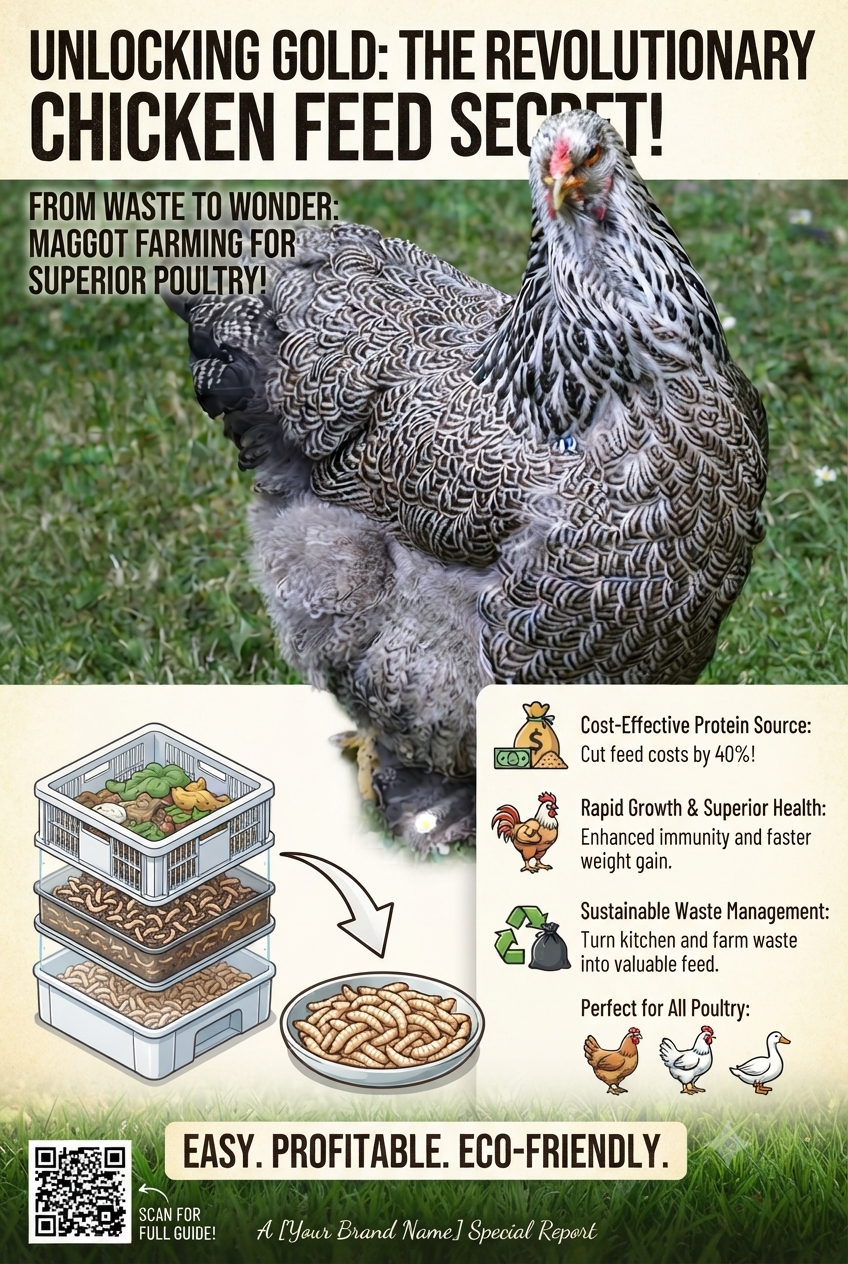

🌾 Trending Tribes
View all →🐄 Fresh from Market
View all →


🏆 Top Farmers
Full board →📚 Learn from E-books
Store →📲 Take us everywhere
Install Farming Tech & Business on your phone — works like a real app, even offline.
Menu (⋮) → "Add to Home screen" / "Install app"