<h1>20 Most Common Rabbit Breeds: A Professional Farmer's Guide to Profit</h1>
<p>After 15 years of managing commercial rabbitries across Nigeria and West Africa, I have learned that your choice of breed is the single most important factor determining your profit margin. Whether you are aiming for high-intensity meat production or the luxury pet market, selecting from the 20 most <strong>common rabbit breeds</strong> is the most critical decision you will make. In my experience, many farmers fail because they choose a breed based on looks rather than performance metrics like Feed Conversion Ratio (FCR) or heat tolerance. In this guide, we will break down the characteristics, management requirements, and commercial viability of the most popular breeds currently dominating the industry.</p>
<h2>Commercial Giants: The Best Common Rabbit Breeds for Meat</h2>
<p>In the commercial sector, the goal is "meat on the table" in the shortest time possible. If you are learning <a href="https://farmtechbusiness.com/blog/how-to-start-rabbit-farming-business-in-nigeria-in-2026-msm45qx4">how to start rabbit farming business in Nigeria in 2026</a>, these four breeds should be your primary focus.</p>
<ul>
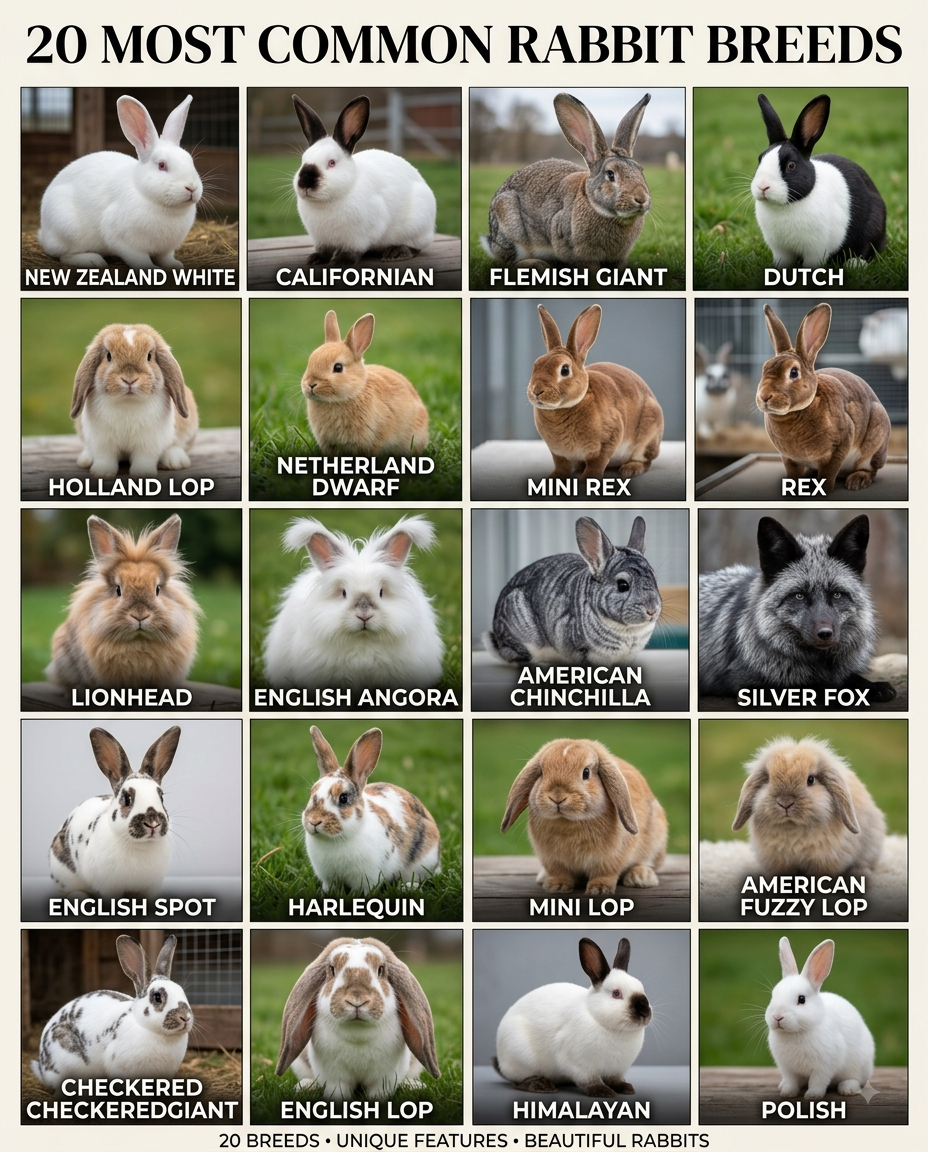
<li><strong>1. New Zealand White (NZW):</strong> The "Gold Standard" for meat. They have a high meat-to-bone ratio and reach 2.5kg fryer weight in just 8-10 weeks. They are one of the most <strong>common rabbit breeds</strong> because of their excellent mothering ability and large litter sizes (8-12 kits).</li>
<li><strong>2. Californian:</strong> Easily identified by their white bodies and black points (nose, ears, feet). They are slightly smaller than NZW but have even higher meat quality. Crossing a Californian buck with an NZW doe is a pro-level move for hybrid vigor.</li>
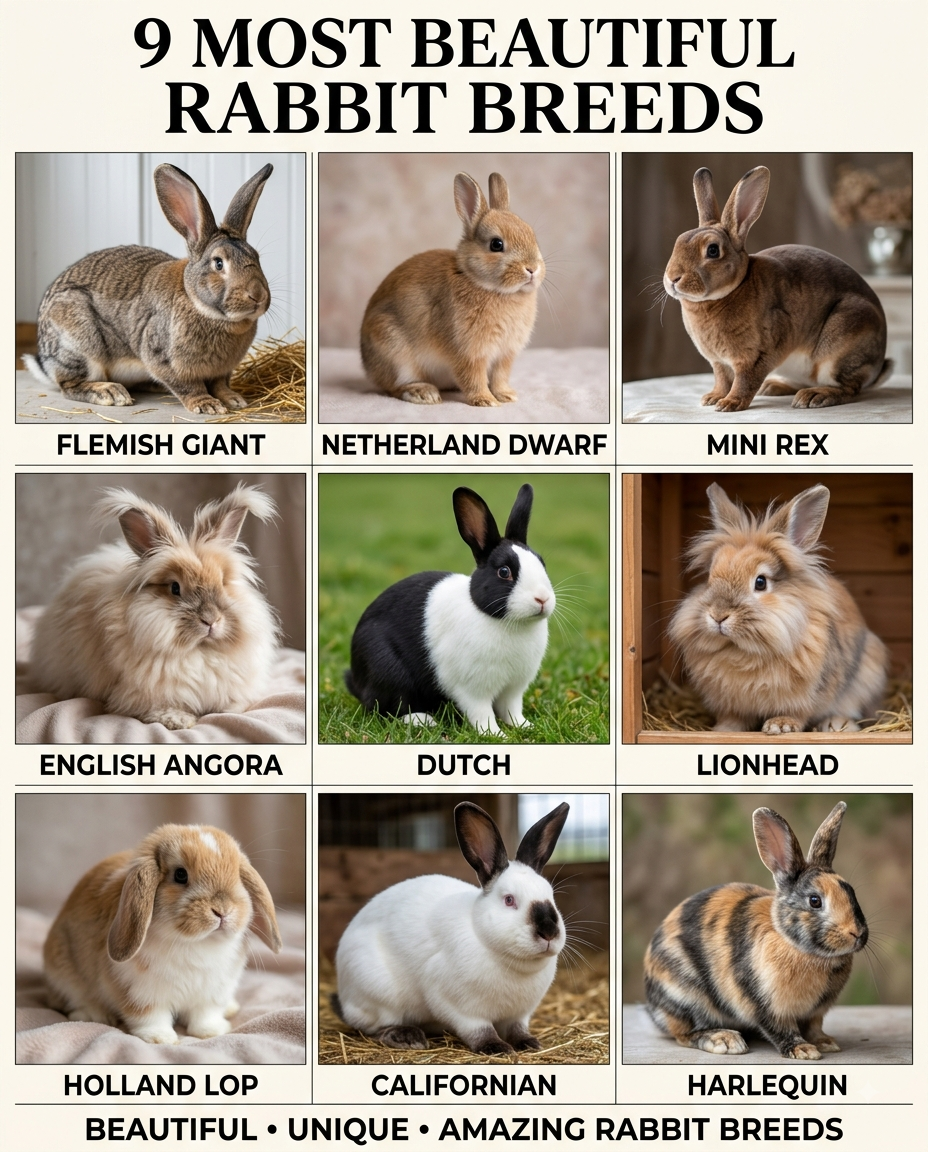
<li><strong>3. Flemish Giant:</strong> These are the "Universal Giants." While they can reach 7-10kg, they have a slower growth rate and higher bone density, which can lower your profit if you aren't careful with feed costs.</li>
<li><strong>4. Hyla (Hybrid):</strong> Technically a commercial hybrid rather than a pure breed, the Hyla is currently the king of Nigerian commercial farms. They are specifically bred for high prolificacy and resistance to common tropical stressors.</li>
</ul>
<blockquote><strong>Pro Tip:</strong> When raising meat breeds in hot climates, ensure your hutches are at least 3 feet off the ground and use "Vital Feed" or "Topfeeds" rabbit pellets with a minimum of 16% crude protein. Heat stress is the silent killer of the New Zealand White in Africa.</blockquote>
<h2>Pet and Exhibition: The Most Common Rabbit Breeds for Beauty</h2>
<p>The pet market in urban centers like Lagos and Abuja is booming. If your interest lies in aesthetics, you should look into <a href="https://farmtechbusiness.com/blog/10-best-rabbit-breeds-for-meat-production-a-commercial-guide-msok9q4c">10 best rabbit breeds for meat production</a> for comparison, but the following are the <strong>common rabbit breeds</strong> favored by pet owners.</p>
<h3>The Dwarf and Lop Favorites</h3>
<ul>
<li><strong>5. Holland Lop:</strong> Famous for their lopped ears and compact, "bulldog" head shape. They are sweet-natured and fetch high prices in the pet niche.</li>
<li><strong>6. Netherland Dwarf:</strong> One of the smallest <strong>common rabbit breeds</strong>. They are energetic but can be skittish, making them better for adult enthusiasts than small children.</li>
<li><strong>7. Lionhead:</strong> Recognizable by the woolly mane around their heads. They require regular grooming to prevent wool block, a common digestive issue.</li>
<li><strong>8. Mini Rex:</strong> These rabbits have a unique "plush" fur that feels like velvet. They are incredibly popular due to their calm temperament and hypoallergenic fur properties.</li>
</ul>
<h2>Dual-Purpose and Fur-Producing Breeds</h2>
<p>Some <strong>common rabbit breeds</strong> offer a "double-income" stream: meat and high-value pelts. According to the <a href="https://www.fao.org/4/t1690e/t1690e00.htm">Food and Agriculture Organization (FAO)</a>, rabbit meat production is a highly efficient way to address protein deficiency, but the pelt is a wasted resource in many developing markets.</p>
<ul>
<li><strong>9. Standard Rex:</strong> Unlike the Mini Rex, the Standard Rex is large enough for meat production (3.5-4.5kg) while providing the world's most sought-after rabbit fur.</li>
<li><strong>10. Chinchilla Rabbit:</strong> Not to be confused with the rodent, this breed has incredibly dense, soft grey fur. The Giant Chinchilla variant is excellent for commercial meat production.</li>
<li><strong>11. French Angora:</strong> These are the wool producers. While they require intense management, their wool is a luxury fiber. Research from the <a href="https://anrcatalog.ucanr.edu/pdf/8381.pdf">University of California</a> highlights that intensive care is needed to prevent respiratory issues in long-haired breeds.</li>
<li><strong>12. Silver Fox:</strong> A rare but 100% dual-purpose breed. They have unique "silvered" fur that stands straight up when stroked from tail to head.</li>
</ul>
<h2>The All-Rounders: Versatile Common Rabbit Breeds</h2>
<p>If you are a homestead farmer, you want <strong>common rabbit breeds</strong> that are hardy and require minimal fuss. These breeds may not grow as fast as the Hyla, but they are resilient.</p>
<ul>
<li><strong>13. Dutch:</strong> Known for their distinctive white blaze and saddle markings. They are small-to-medium and very hardy against common African diseases.</li>
<li><strong>14. English Spot:</strong> Primarily a show rabbit, but their lean body makes them a decent meat source for home consumption.</li>
<li><strong>15. Checkered Giant:</strong> A large, active breed. They require large cages (at least 4ft x 2ft) to thrive.</li>
<li><strong>16. Harlequin:</strong> Named for their "clown-like" color patterns. They are exceptionally beautiful and make great conversation starters for farm tours.</li>
<li><strong>17. Beveren:</strong> One of the oldest <strong>common rabbit breeds</strong>, very hardy and fast-growing with a mandate for large litters.</li>
<li><strong>18. Champagne d'Argent:</strong> Born black, their fur turns a beautiful silver-grey as they mature. They are prized for their heavy meat yield.</li>
<li><strong>19. Himalayan:</strong> One of the oldest breeds, shaped like a cylinder. They are calm, easy to handle, and very resistant to cold.</li>
<li><strong>20. Palomino:</strong> A meat-type rabbit with a beautiful golden coat. They are docility-personified, making them great for beginner farmers.</li>
</ul>
<h2>Mistakes to Avoid When Selecting Your Breed</h2>
<p>In my 15 years on the field, the biggest mistake I see is "mongrelization." Farmers often buy <strong>common rabbit breeds</strong> and cross them indiscriminately. This leads to "genetic dilution," where the offspring lose the fast-growth traits of the parents. If you are serious about profit, keep your purebred lines separate and only cross for a specific purpose (like the NZW x Californian cross for meat).</p>
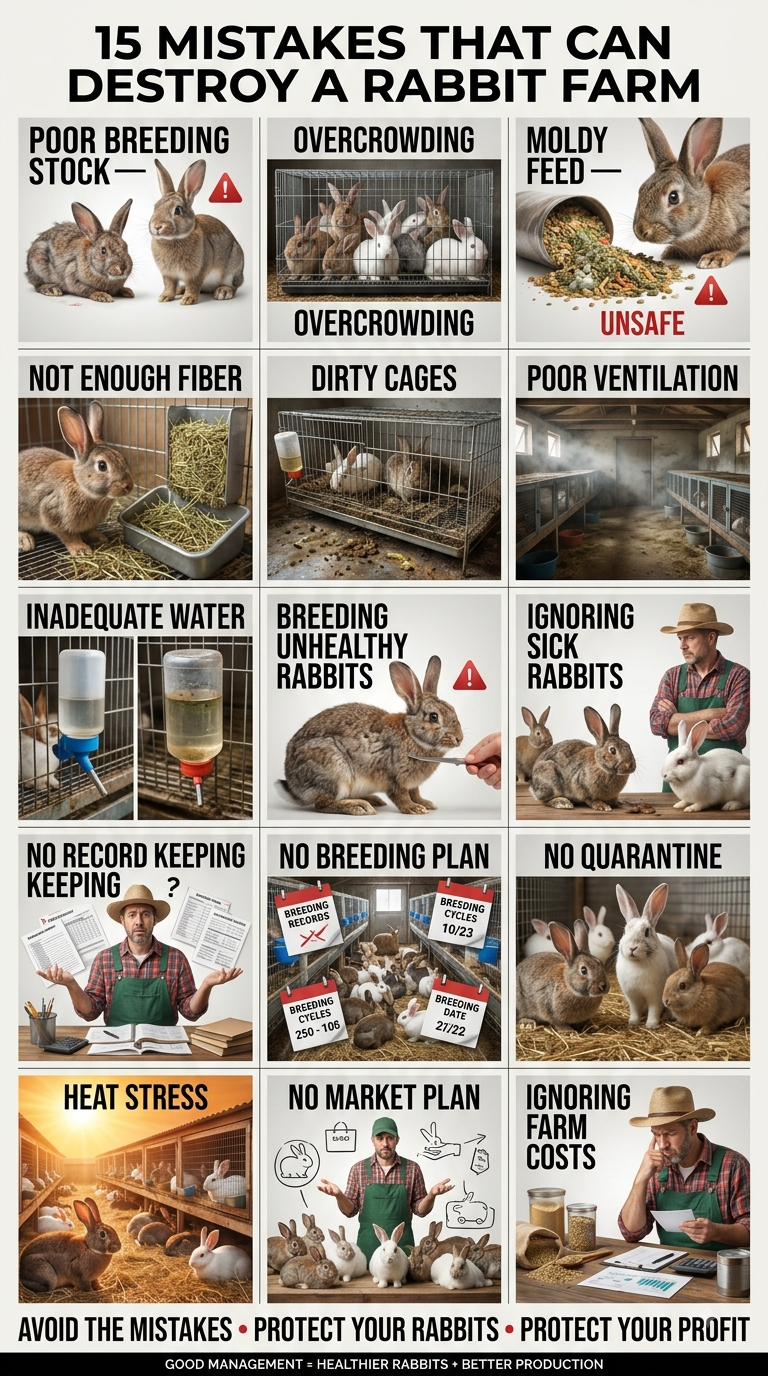
<p>Another critical error is ignoring health indicators during purchase. Always check for clean ears (no mites), dry noses (no snuffles), and clean hocks. If you notice diarrhea, immediately treat your herd with <strong>Amprolium</strong> (1g per 1 liter of water) for 5 days. Coccidiosis is the leading cause of death among these <strong>common rabbit breeds</strong> during the weaning stage.</p>
<h2>Nutrition and Housing for Common Rabbit Breeds</h2>
<p>Regardless of which of the <strong>common rabbit breeds</strong> you choose, their success depends on your management. I recommend a feeding ratio of 70% high-quality hay (like Tridax procumbens or Alfalfa) and 30% pellets. Avoid feeding "wet" greens like lettuce or cabbage to young rabbits, as this often triggers bloat.</p>
<p>For housing, ensure adequate ventilation. Amonia buildup from urine can cause pneumonia in breeds like the Flemish Giant or Rex. Using a wire-mesh floor (1/2 inch by 1 inch) allows droppings to fall through, keeping the rabbits clean and reducing the risk of parasitic infections.</p>
<h2>Conclusion</h2>
<p>Choosing from the 20 most <strong>common rabbit breeds</strong> is about matching the rabbit’s genetics to your farm's goals. If you want meat and quick cash flow, stick with New Zealand Whites or Hyla. If you want high-end pets, the Holland Lop and Mini Rex are your best bets. Success in rabbitry doesn't happen by chance; it happens by making data-driven decisions on breeding and health management. </p>
<p>Ready to take your farming to the next level? <strong>Join Farming Tech & Business today</strong> for exclusive field guides, expert webinars, and a community of professional farmers dedicated to modernizing agriculture in Africa!</p>