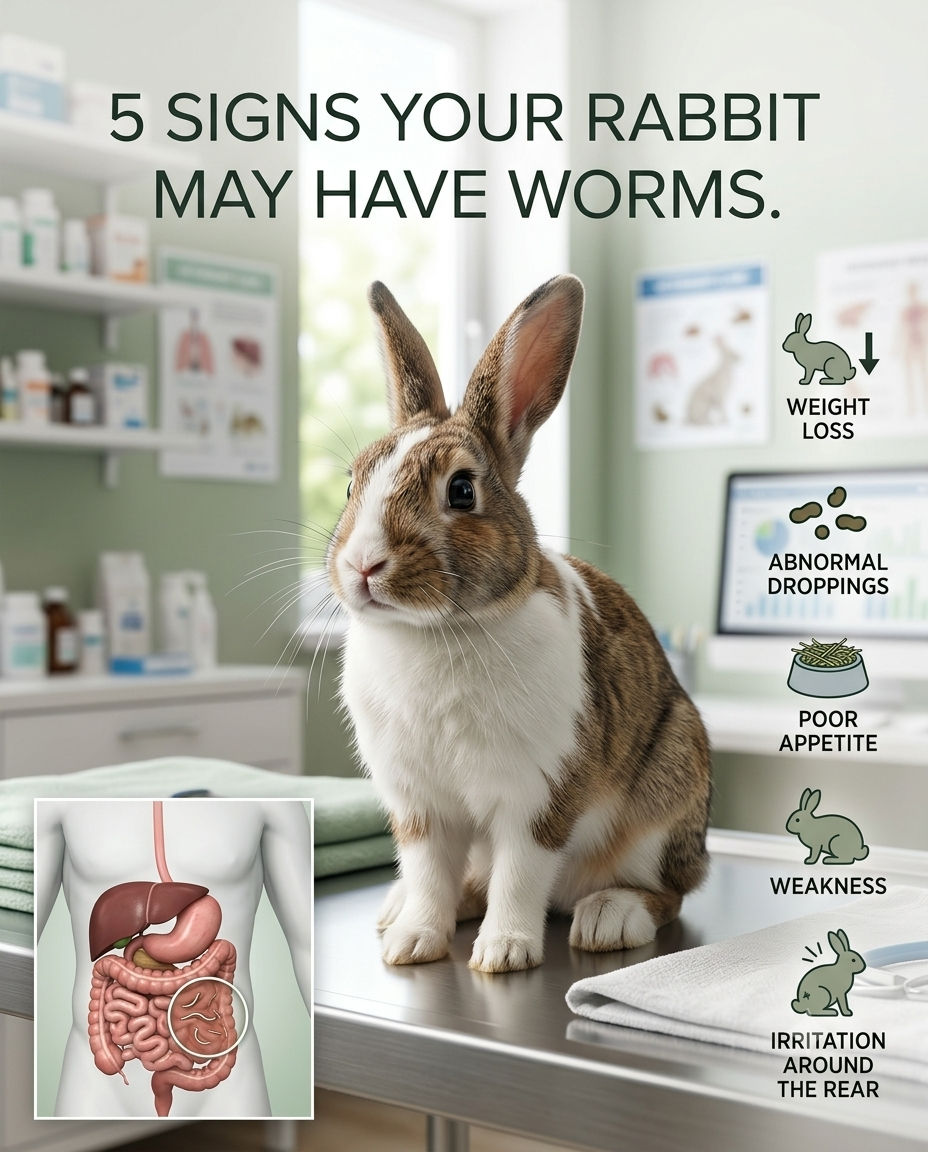
<p>Rabbits can develop different types of internal parasites, and the signs may sometimes look like other digestive or health problems.</p><p></p><p>Knowing what to watch for can help you identify a problem early and seek the right treatment.</p><p></p><h1><strong>1. Weight Loss</strong></h1><p></p><p>If your <a target="_blank" rel="noopener noreferrer nofollow" href="https://www.facebook.com/share/p/1M4q6wsY3D/">rabbit is eating</a> normally but continues to lose weight, internal parasites could be one possible cause.</p><p></p><p>However, weight loss can also result from poor nutrition, dental problems, infections, chronic disease, or other conditions. Monitor your rabbit's body condition regularly.</p><p></p><h1><strong>2. Abnormal Droppings</strong></h1><p></p><p>Changes in droppings can be a warning sign that something is wrong.</p><p></p><p>Diarrhea, unusually soft droppings, reduced fecal output, or changes in the normal appearance of the feces may indicate digestive problems.</p><p></p><p>Parasites are only one possible cause, so avoid assuming that worms are responsible without proper diagnosis.</p><p></p><h1><strong>3. Poor Appetite</strong></h1><p></p><p>A healthy rabbit should maintain a consistent appetite.</p><p></p><p>If your rabbit suddenly starts eating less, takes longer to eat, or refuses food, pay close attention.</p><p></p><p>Loss of appetite can become serious in rabbits because reduced food intake can contribute to gastrointestinal problems.</p><p></p><h1><strong>4. Weakness and Poor Growth</strong></h1><p></p><p>A rabbit affected by illness or parasites may become less active.</p><p></p><p>Young rabbits may also show poor growth, while affected rabbits can develop a rough or unhealthy looking coat.</p><p></p><p>Weakness can have many causes, so it should not automatically be blamed on worms.</p><h1></h1><h1><strong>5. Irritation Around the Rear</strong></h1><p></p><p>Persistent itching, irritation, or unusual activity around the anal area can sometimes be associated with certain parasites.</p><p></p><p>Check the area regularly for dirt, inflammation, abnormal discharge, or other changes.</p><p></p><p>Keeping the cage clean can also help reduce exposure to parasites and other disease causing organisms.</p><p></p><p>What Should You Do If You Suspect Worms</p><p></p><p>Do not give your rabbit a dewormer randomly.</p><p></p><p>Different parasites require different treatments, and some medications that are safe for other animals may be dangerous for rabbits.</p><p></p><p>If possible, have a veterinarian examine the rabbit and perform appropriate testing to determine whether parasites are actually present.</p><p></p><p>Good hygiene, clean housing, safe feed, clean drinking water, and proper management can also help reduce parasite problems.</p><p></p><p>Final Advice</p><p></p><p>A rabbit losing weight, refusing food, becoming weak, or developing abnormal droppings needs attention.</p><p></p><p>Worms may be one possible cause, but several other health problems can produce similar symptoms.</p><p></p><p>Early observation and proper diagnosis can make a major difference in rabbit health and survival.</p><p></p><p>Rabbit farmers should always treat the actual cause rather than simply treating symptoms.</p><p></p>
5 Signs Your Rabbit May Have Worms
Farming Tech & Business | 8/10/2026 | 0 views
Continue Learning
News
Rabbit Farming: 7 Mistakes That Kill Your Profits
Healthy Rabbit Indicators: 5 Essential Signs Every Farmer Must Know
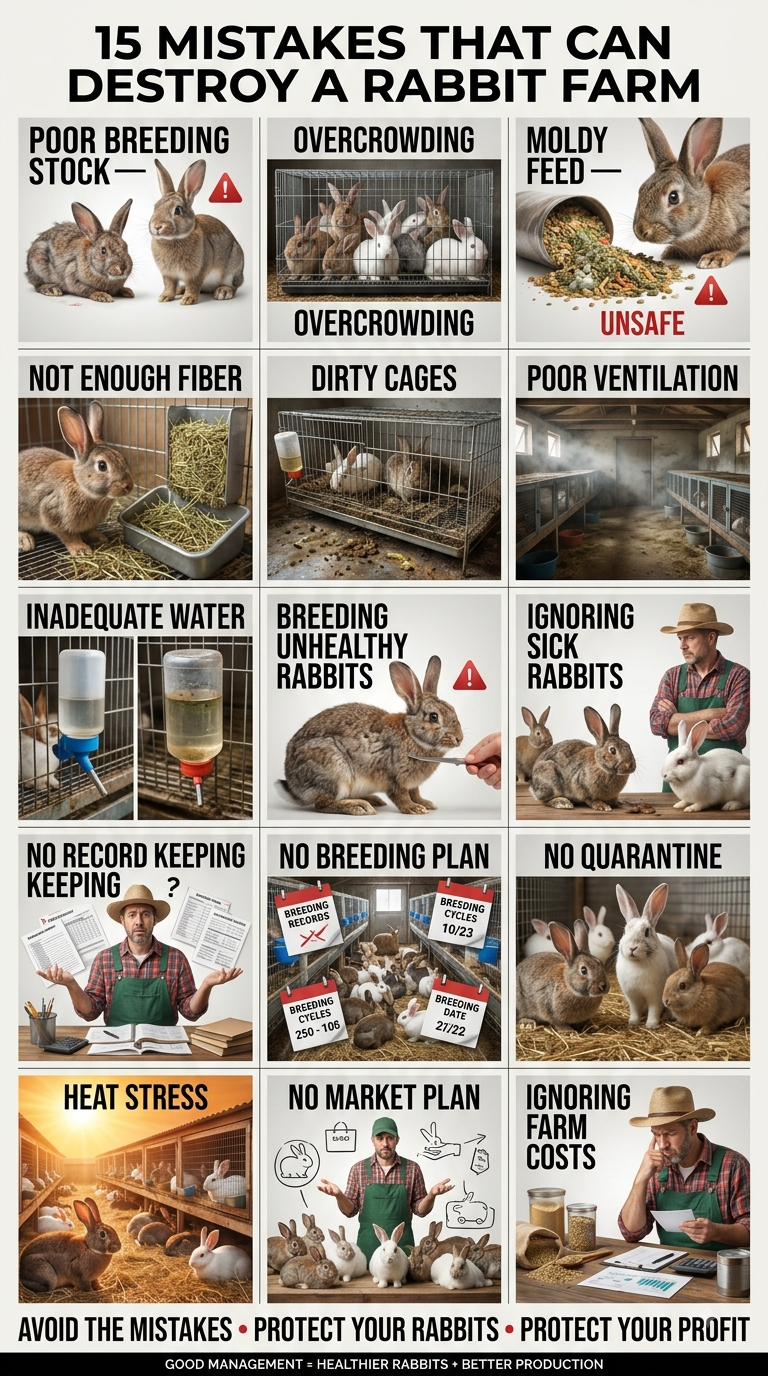
15 Rabbit Farming Business Mistakes That Can Destroy Your Profitability

9 Most Beautiful Rabbit Breeds in the World: A Professional Farmer’s Guide
9 Most Beautiful Rabbit Breeds in the World: A Professional Farmer’s Guide
News
HOW TO WEAN RABBIT KITS PROPERLY: THE STEP-BY-STEP GUIDE EVERY RABBIT FARMER SHOULD KNOW