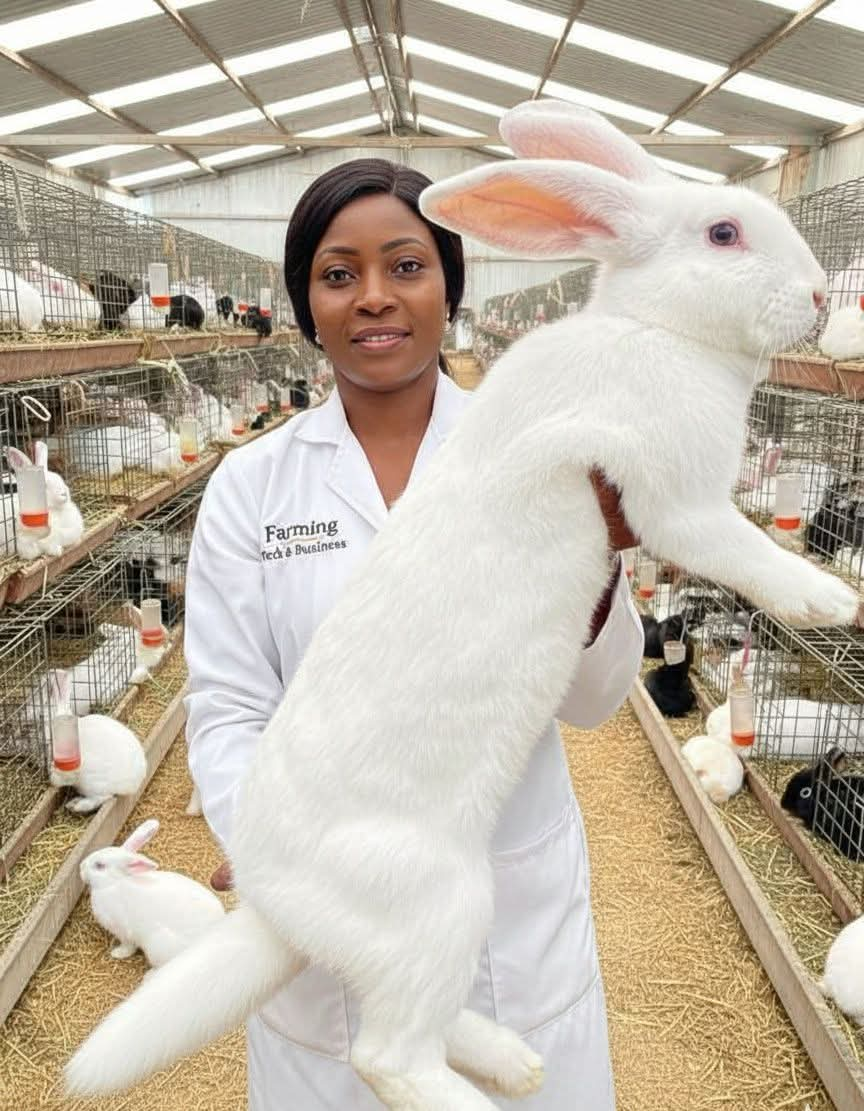
<p>Rabbit farming, also called cuniculture, is one of the livestock businesses Nigerians can start on a relatively small scale and gradually expand.</p><p>Unlike cattle farming, rabbit production does not require large hectares of land. A properly designed rabbitry can be operated in a backyard, rented compound, small farm space or dedicated commercial facility.</p><p>More importantly, rabbits reproduce relatively quickly, can utilize forage and agricultural by-products, and can generate income through several markets, including breeding stock, meat, pets and manure.</p><p>Nigeria's rabbit sector remains relatively underdeveloped. A 2026 report in Punch quoted experts describing rabbit production as a promising but largely untapped sector, while an earlier review of Nigerian rabbit production found that much of the industry was still based on smallholder, family-scale operations.</p><p>That creates an opportunity—but rabbit farming is not automatically profitable.</p><p>The farmers who make money are usually the ones who understand breeding, nutrition, housing, health management, records and marketing rather than simply buying rabbits and waiting for them to multiply.</p><p>This guide explains how to start a rabbit farming business in Nigeria in 2026, even if you are a beginner.</p><p>Table of Contents</p><p>1. Is Rabbit Farming Profitable in Nigeria?</p><p>2. Why Start Rabbit Farming in Nigeria?</p><p>3. How Much Capital Do You Need?</p><p>4. Choose Your Rabbit Farming Business Model</p><p>5. Choose the Right Location</p><p>6. Select the Right Rabbit Breeds</p><p>7. Buy Quality Breeding Stock</p><p>8. Build the Rabbit House</p><p>9. Rabbit Cage and Hutch Requirements</p><p>10. Rabbit Feeding in Nigeria</p><p>11. Breeding and Reproduction</p><p>12. Rabbit Pregnancy and Kindling</p><p>13. Caring for Baby Rabbits</p><p>14. Rabbit Health Management</p><p>15. Common Rabbit Diseases and Problems</p><p>16. Farm Hygiene and Biosecurity</p><p>17. Rabbit Farming Records</p><p>18. How to Market Rabbits in Nigeria</p><p>19. Who Buys Rabbits?</p><p>20. How to Calculate Rabbit Farming Profit</p><p>21. Common Mistakes Beginners Make</p><p>22. How to Start With Little Capital</p><p>23. How to Scale Your Rabbit Farm</p><p>24. Rabbit Farming Business Plan</p><p>25. 12-Month Growth Strategy</p><p>26. Frequently Asked Questions</p><p>27. Final Advice</p><p>1. Is Rabbit Farming Profitable in Nigeria?</p><p>Yes, rabbit farming can be profitable in Nigeria—but profitability depends on management and market access.</p><p>The biggest mistake is assuming that rabbits automatically equal quick money because they reproduce rapidly.</p><p>A rabbit farm can lose money if:</p><p>You buy poor-quality breeding stock.</p><p>Your rabbits have inadequate nutrition.</p><p>Kits die frequently.</p><p>Your cages are poorly designed.</p><p>You have poor hygiene.</p><p>You breed without keeping records.</p><p>You overcrowd your farm.</p><p>You have no reliable market.</p><p>You sell breeding animals at meat prices.</p><p>You spend too much on feed.</p><p>You expand faster than your management capacity.</p><p>The opportunity exists because rabbit production remains relatively small-scale in Nigeria. Research on Nigerian rabbit production has historically found many farmers keeping only a few breeding animals, with substantial mortality among young rabbits.</p><p>That means better management can be a competitive advantage.</p><p>2. Why Start Rabbit Farming in Nigeria?</p><p>Rabbit farming has several characteristics that make it attractive to small and medium-scale farmers.</p><p>1. Small land requirement</p><p>You do not need a huge farm to begin.</p><p>A properly designed rabbitry can fit into a relatively small space.</p><p>2. Fast reproduction</p><p>Healthy does can produce multiple litters over time.</p><p>However, reproduction should be managed according to the health and condition of the doe—not simply maximized.</p><p>3. Multiple income streams</p><p>A rabbit farmer can potentially earn from:</p><p>Meat rabbits</p><p>Breeding stock</p><p>Weaned kits</p><p>Grow-out rabbits</p><p>Pet rabbits</p><p>Manure</p><p>Rabbit-related training</p><p>Farm tours</p><p>Processed rabbit meat</p><p>4. Feed flexibility</p><p>Rabbits can consume appropriate grasses, forage, leaves and formulated feeds.</p><p>Nigeria's National Farmers' Help Line, operated through the National Agricultural Extension and Research Liaison Services (NAERLS), lists grasses, leaves, weeds, concentrates and agro-industrial by-products among rabbit feed resources.</p><p>5. Scalability</p><p>You can begin with a small breeding unit and expand gradually.</p><p>6. Growing awareness</p><p>Rabbit production is receiving renewed attention in Nigeria. In 2026, agricultural experts called for greater investment in the rabbit value chain and described the sector as capable of contributing to income, employment and nutrition.</p><p>3. How Much Capital Do You Need to Start Rabbit Farming in Nigeria?</p><p>There is no single fixed startup cost for rabbit farming in Nigeria in 2026.</p><p>Your cost depends on:</p><p>Number of rabbits</p><p>Breed</p><p>Cage design</p><p>Building materials</p><p>Location</p><p>Feed prices</p><p>Labour</p><p>Water system</p><p>Equipment</p><p>Whether you already have space</p><p>Whether you build cages yourself</p><p>Instead of asking:</p><p>"How much does rabbit farming cost?"</p><p>Ask:</p><p>"How many rabbits can I afford to manage properly?"</p><p>That's a much better starting point.</p><p>Example of a small-scale setup</p><p>A beginner could budget for:</p><p>Item What to consider</p><p>Breeding rabbits Does + buck(s)</p><p>Rabbit cages Individual or group housing</p><p>Feeders Durable and easy to clean</p><p>Drinkers Reliable water delivery</p><p>Nest boxes For pregnant does</p><p>Feed Concentrate + forage</p><p>Water Clean and available daily</p><p>Medication/health budget Emergency and routine needs</p><p>Transportation Buying stock and delivering orders</p><p>Marketing Photos, social media, flyers</p><p>Contingency Unexpected expenses</p><p>Do not copy an old online startup-cost figure blindly.</p><p>Prices of rabbits, timber, wire mesh, roofing materials, feed and labour vary significantly across Nigeria and change over time.</p><p>Instead, obtain current quotations in your state before preparing your final budget.</p><p>4. Choose Your Rabbit Farming Business Model</p><p>Before buying your first rabbits, decide what you want to sell.</p><p>This decision affects your breeds, housing, feeding, breeding system and marketing strategy.</p><p>Model 1: Meat Rabbit Production</p><p>You raise rabbits primarily for meat.</p><p>Your customers may include:</p><p>Individuals</p><p>Restaurants</p><p>Hotels</p><p>Butchers</p><p>Meat processors</p><p>Health-conscious consumers</p><p>Model 2: Breeding Stock</p><p>You produce healthy rabbits for other farmers.</p><p>This can be more valuable than selling every rabbit for meat if you develop a reputation for good genetics.</p><p>Model 3: Pet Rabbit Business</p><p>You raise attractive, manageable breeds for people who want rabbits as pets.</p><p>Model 4: Mixed Rabbit Business</p><p>You combine:</p><p>Breeding + meat + manure + selected pet sales.</p><p>For many small farms, diversification can reduce dependence on one market.</p><p>5. Choose the Right Location for Your Rabbit Farm</p><p>Your rabbitry doesn't necessarily need to be far from town.</p><p>In fact, being relatively close to your customers can reduce transportation costs.</p><p>Look for a location with:</p><p>Good ventilation</p><p>Reliable water</p><p>Drainage</p><p>Security</p><p>Easy access</p><p>Protection from flooding</p><p>Protection from predators</p><p>Enough space for expansion</p><p>Access to forage/feed</p><p>Reasonable distance from customers</p><p>Avoid poorly ventilated locations</p><p>Heat stress can severely affect rabbit performance.</p><p>Your rabbitry should allow adequate airflow while protecting animals from:</p><p>Heavy rain</p><p>Direct harsh sunlight</p><p>Strong wind</p><p>Predators</p><p>Excessive heat</p><p>6. Choose the Right Rabbit Breeds</p><p>Breed selection should depend on your business objective.</p><p>Some breeds and genetic lines are more suitable for meat production, while others are better known for appearance, size, fur or pet characteristics.</p><p>For commercial meat production, breeds commonly considered include:</p><p>New Zealand</p><p>Known for commercial meat production and good growth characteristics.</p><p>Californian</p><p>Another widely recognized meat-production breed.</p><p>Crossbreeds</p><p>Crossbreeding can also produce useful commercial animals when the breeding program is properly managed.</p><p>Don't choose a breed simply because it looks beautiful.</p><p>Choose based on:</p><p>Growth rate</p><p>Adult size</p><p>Litter performance</p><p>Mothering ability</p><p>Adaptability</p><p>Feed efficiency</p><p>Health</p><p>Availability of quality breeding stock</p><p>Customer demand</p><p>7. Buy Quality Breeding Stock</p><p>Your first rabbits can determine the future of your farm.</p><p>Don't buy breeding stock solely because they are cheap.</p><p>When buying rabbits, examine:</p><p>Eyes</p><p>They should be clear and free from obvious discharge.</p><p>Nose</p><p>Avoid animals with persistent nasal discharge.</p><p>Coat</p><p>The fur should appear reasonably clean and healthy.</p><p>Body condition</p><p>Avoid extremely thin or unhealthy animals.</p><p>Feet</p><p>Check for injuries or severe sores.</p><p>Teeth</p><p>Look for obvious dental abnormalities.</p><p>Behaviour</p><p>Healthy rabbits should generally be alert and responsive.</p><p>Reproductive history</p><p>For mature breeding animals, ask about:</p><p>Previous litters</p><p>Litter size</p><p>Kit survival</p><p>Mating history</p><p>Health problems</p><p>If possible, buy from a breeder who keeps proper records.</p><p>8. Build the Rabbit House</p><p>A rabbit house should be designed around the animals—not simply around available materials.</p><p>Nigeria's National Farmers' Help Line provides specific rabbit housing guidance, including raised hutches, breed-dependent dimensions and nest-box requirements.</p><p>The rabbitry should provide:</p><p>Ventilation</p><p>Shade</p><p>Protection from rain</p><p>Easy cleaning</p><p>Safe flooring</p><p>Easy access to feeders</p><p>Easy access to drinkers</p><p>Manure collection</p><p>Predator protection</p><p>Adequate space</p><p>Raised housing</p><p>Raised cages can make:</p><p>Cleaning easier</p><p>Manure collection easier</p><p>Inspection easier</p><p>Feeding easier</p><p>Waste management easier</p><p>NAERLS recommends raised rabbit housing and gives example hutch dimensions, while noting that housing should be adapted according to breed, purpose, age, available space and climate.</p><p>9. Rabbit Cage and Hutch Requirements</p><p>Do not overcrowd rabbits.</p><p>Each rabbit should have adequate room to:</p><p>Stand</p><p>Sit normally</p><p>Turn around</p><p>Eat</p><p>Drink</p><p>Rest comfortably</p><p>A pregnant doe needs additional consideration because she will eventually require a nest box.</p><p>Your cage design should also make it easy for you to:</p><p>Remove manure</p><p>Clean equipment</p><p>Inspect rabbits</p><p>Identify sick animals</p><p>Record births</p><p>Handle animals safely</p><p>Good housing saves labour.</p><p>Poor housing can turn every cleaning session into a difficult job.</p><p>10. Rabbit Feeding in Nigeria</p><p>Feed is one of the biggest recurring expenses in rabbit farming.</p><p>A good rabbit feeding program should provide adequate:</p><p>Fibre</p><p>Protein</p><p>Energy</p><p>Vitamins</p><p>Minerals</p><p>Clean water</p><p>NAERLS identifies grasses such as elephant grass, spear grass, guinea grass and gamba grass, as well as appropriate leaves and agricultural by-products, as potential rabbit feed resources.</p><p>Examples of potential forage resources</p><p>Depending on availability and suitability:</p><p>Elephant grass</p><p>Guinea grass</p><p>Sweet potato leaves</p><p>Cowpea leaves</p><p>Plantain leaves</p><p>Carrot leaves</p><p>Appropriate weeds and forage plants</p><p>However:</p><p>Never assume every green plant is safe for rabbits.</p><p>Correct identification and preparation matter.</p><p>11. Don't Change Rabbit Feed Suddenly</p><p>One important management principle is gradual feed transition.</p><p>NAERLS specifically advises against sudden feed changes.</p><p>If you suddenly change:</p><p>Concentrate</p><p>Forage</p><p>Feeding quantity</p><p>Feeding schedule</p><p>you may create digestive problems.</p><p>Introduce changes gradually while monitoring:</p><p>Appetite</p><p>Droppings</p><p>Body condition</p><p>Behaviour</p><p>Growth</p><p>12. Clean Water Is Non-Negotiable</p><p>A rabbit farm needs a reliable water supply.</p><p>Water should be:</p><p>Clean</p><p>Fresh</p><p>Available consistently</p><p>Delivered through clean drinkers</p><p>Check drinkers every day.</p><p>A blocked drinker can become a serious problem before the farmer notices.</p><p>13. Rabbit Breeding and Reproduction</p><p>Rabbit reproduction is one of the biggest attractions of rabbit farming.</p><p>But breeding more rabbits doesn't necessarily mean making more money.</p><p>You need a controlled breeding program.</p><p>Keep records of:</p><p>Doe identification</p><p>Buck identification</p><p>Mating date</p><p>Expected kindling date</p><p>Actual kindling date</p><p>Number born</p><p>Number alive</p><p>Number weaned</p><p>Growth</p><p>Problems</p><p>This allows you to identify your best and worst breeders.</p><p>14. Don't Breed Every Rabbit</p><p>Not every rabbit should become a breeder.</p><p>Select animals based on performance.</p><p>Consider retaining rabbits with:</p><p>Good growth</p><p>Good body condition</p><p>Healthy offspring</p><p>Good mothering ability</p><p>Good survival</p><p>Good temperament</p><p>Good reproductive performance</p><p>Remove consistently poor performers from your breeding program.</p><p>This is how a small rabbit farm gradually improves its genetics.</p><p>15. Pregnancy and Kindling</p><p>A pregnant doe needs special attention.</p><p>Provide:</p><p>Good nutrition</p><p>Clean water</p><p>Quiet surroundings</p><p>Appropriate housing</p><p>Nest box at the correct time</p><p>Regular observation</p><p>Avoid unnecessary handling and stress.</p><p>Prepare the nest area before kindling and inspect the litter afterward.</p><p>16. Caring for Baby Rabbits</p><p>Baby rabbits are one of the most vulnerable parts of the production cycle.</p><p>The farmer should monitor:</p><p>Nest condition</p><p>Kit warmth</p><p>Nursing</p><p>Mother behaviour</p><p>Dead kits</p><p>Injuries</p><p>Hygiene</p><p>Growth</p><p>One of the biggest opportunities for improving profitability is reducing kit mortality.</p><p>Historical Nigerian research reported high mortality between birth and marketing, particularly among young rabbits.</p><p>Therefore, don't focus only on increasing the number of kits born.</p><p>Focus on:</p><p>How many healthy rabbits survive to saleable age?</p><p>That is the number that affects your business.</p><p>17. Rabbit Health Management</p><p>Prevention is cheaper than constantly treating disease problems.</p><p>Every rabbit farmer should develop a daily observation routine.</p><p>Look for:</p><p>Loss of appetite</p><p>Diarrhea</p><p>Abnormal droppings</p><p>Nasal discharge</p><p>Eye discharge</p><p>Hair loss</p><p>Skin lesions</p><p>Weight loss</p><p>Difficulty breathing</p><p>Unusual posture</p><p>Reduced activity</p><p>Sudden deaths</p><p>When you notice something unusual, isolate the affected animal where appropriate and seek advice from a qualified veterinarian or animal-health professional.</p><p>18. Common Rabbit Health Problems</p><p>Rabbit farmers may encounter problems involving:</p><p>Coccidiosis</p><p>Mange and other skin problems</p><p>Digestive disorders</p><p>Respiratory problems</p><p>Dental problems</p><p>Heat stress</p><p>Injuries</p><p>Poor body condition</p><p>Nigerian rabbit-production research has identified coccidial infections and mange among commonly encountered problems and highlighted the importance of reducing mortality.</p><p>Do not randomly administer antibiotics or other medicines.</p><p>Correct diagnosis matters.</p><p>19. Farm Hygiene and Biosecurity</p><p>Your rabbit farm should have a simple biosecurity system.</p><p>Do this:</p><p>Clean cages regularly.</p><p>Keep feed dry.</p><p>Remove spoiled feed.</p><p>Keep water containers clean.</p><p>Control rodents.</p><p>Limit unnecessary visitors.</p><p>Quarantine new animals where appropriate.</p><p>Isolate sick rabbits.</p><p>Dispose of dead animals properly.</p><p>Clean equipment regularly.</p><p>Your farm should be designed so that cleaning is easy.</p><p>If a cage is difficult to clean, you are more likely to postpone cleaning.</p><p>20. Keep Rabbit Farming Records</p><p>This is where many small farms fail.</p><p>A serious rabbit business needs records.</p><p>Create a record for every breeding animal.</p><p>Record:</p><p>Animal ID: R001</p><p>Breed: New Zealand</p><p>Sex: Doe</p><p>Date of birth:</p><p>Sire:</p><p>Dam:</p><p>Mating date:</p><p>Kindling date:</p><p>Born:</p><p>Alive:</p><p>Weaned:</p><p>Weight:</p><p>Remarks:</p><p>Over time, these records tell you which animals are actually profitable.</p><p>21. How to Market Rabbits in Nigeria</p><p>Don't wait until your rabbits are ready for sale before looking for customers.</p><p>Find your market before expanding production.</p><p>Potential customers include:</p><p>Individual consumers</p><p>Sell directly through:</p><p>WhatsApp</p><p>Facebook</p><p>Instagram</p><p>Local communities</p><p>Restaurants</p><p>Approach restaurants that are willing to introduce rabbit meat to customers.</p><p>Hotels</p><p>Some hotels may purchase specialty meats depending on their menu and customer base.</p><p>Other farmers</p><p>Sell:</p><p>Weaners</p><p>Growers</p><p>Proven does</p><p>Proven bucks</p><p>Breeding pairs</p><p>Pet owners</p><p>Some customers buy rabbits as pets.</p><p>Agricultural trainees</p><p>If you become experienced, training and farm consultation can become another income stream.</p><p>22. Build Your Rabbit Brand Online</p><p>Social media can become a powerful marketing tool for a rabbit farm.</p><p>Post:</p><p>Rabbit growth videos</p><p>Feeding demonstrations</p><p>Before-and-after growth</p><p>New litters</p><p>Farm tours</p><p>Housing designs</p><p>Rabbit care tips</p><p>Customer testimonials</p><p>Available breeding stock</p><p>Educational content</p><p>Don't only post:</p><p>"Rabbits available."</p><p>Instead, educate people about rabbits until they trust you.</p><p>Content builds demand.</p><p>23. How to Calculate Rabbit Farming Profit</p><p>Never calculate profit by looking only at the selling price.</p><p>Use:</p><p>Revenue</p><p>Number of rabbits sold × selling price per rabbit</p><p>Then subtract:</p><p>Feed</p><p>Breeding stock</p><p>Housing depreciation</p><p>Labour</p><p>Medication</p><p>Transportation</p><p>Water</p><p>Electricity</p><p>Mortality losses</p><p>Marketing</p><p>Maintenance</p><p>Other operating costs</p><p>Example</p><p>Suppose:</p><p>You produce 100 saleable rabbits.</p><p>Average selling price:</p><p>₦X per rabbit</p><p>Revenue:</p><p>100 × ₦X = ₦100X</p><p>If total production and operating expenses are ₦Y:</p><p>Estimated operating profit = ₦100X − ₦Y</p><p>The important point is that you should insert current prices from your own location, rather than relying on outdated online prices.</p><p>24. The Most Important Rabbit Farming Profit Formula</p><p>A simple way to think about the business is:</p><p>Profit = Sales − Total Costs</p><p>But for rabbit farming, there is an even more important metric:</p><p>Profitability = How many healthy, saleable rabbits you produce at an acceptable cost.</p><p>A doe producing 12 kits with 10 surviving may be more valuable to your business than a doe producing 15 kits with only 5 surviving.</p><p>25. Start Small Instead of Starting Big</p><p>One of the safest strategies for a beginner is:</p><p>Start with a manageable breeding unit.</p><p>Learn:</p><p>Feeding</p><p>Cleaning</p><p>Breeding</p><p>Kindling</p><p>Kit management</p><p>Disease prevention</p><p>Record keeping</p><p>Marketing</p><p>Then expand.</p><p>The Nigerian rabbit industry has historically been dominated by smallholder operations, so starting small is not unusual.</p><p>26. A Practical Beginner's Rabbit Farming Model</p><p>A beginner could structure the business like this:</p><p>Phase 1 — Learning</p><p>Learn rabbit:</p><p>Anatomy</p><p>Nutrition</p><p>Housing</p><p>Breeding</p><p>Health</p><p>Handling</p><p>Record keeping</p><p>Phase 2 — Pilot farm</p><p>Start with a manageable number of quality breeding rabbits.</p><p>Phase 3 — Stabilization</p><p>Improve:</p><p>Kit survival</p><p>Growth rate</p><p>Feed efficiency</p><p>Breeding performance</p><p>Phase 4 — Market development</p><p>Build regular customers.</p><p>Phase 5 — Expansion</p><p>Increase your breeding population only when:</p><p>production + management + market demand can support expansion.</p><img src="https://ortwcicipqdonjrfuyns.supabase.co/storage/v1/object/public/blog-images/1786298726210-wu0lq64u49o.jpg" />
How to Start Rabbit Farming Business in Nigeria in 2026
Farming Tech & Business | 8/9/2026 | 28 views