<h1>9 Biggest Chicken Breeds in the World: A Professional Farmer's Guide</h1>
<p>In my 15 years of consulting across poultry farms in Nigeria and Ghana, I have seen farmers move from keeping simple backyard scavengers to investing in high-performance genetics. While most commercial focus stays on high-speed broilers, there is a growing prestige and profit in raising the <strong>biggest chicken breeds in the world</strong>. These "miniature dinosaurs" are not just for show; they offer substantial carcass weight, docile temperaments, and a visual impact that can command premium prices in the heritage meat market.</p>
<p>Choosing the right breed requires more than just looking at a photo. You must understand their growth rates, feed conversion ratios (FCR), and how they handle the tropical heat. If you are looking to diversify your livestock portfolio, perhaps alongside other ventures like knowing <a href="https://farmtechbusiness.com/blog/how-to-start-rabbit-farming-business-in-nigeria-in-2026-msm460h6">how to start rabbit farming business in Nigeria in 2026</a>, these giant birds are an excellent choice for a high-value niche.</p>
<h2>Detailed Profiles of the 9 Biggest Chicken Breeds in the World</h2>
<h3>1. Jersey Giant</h3>
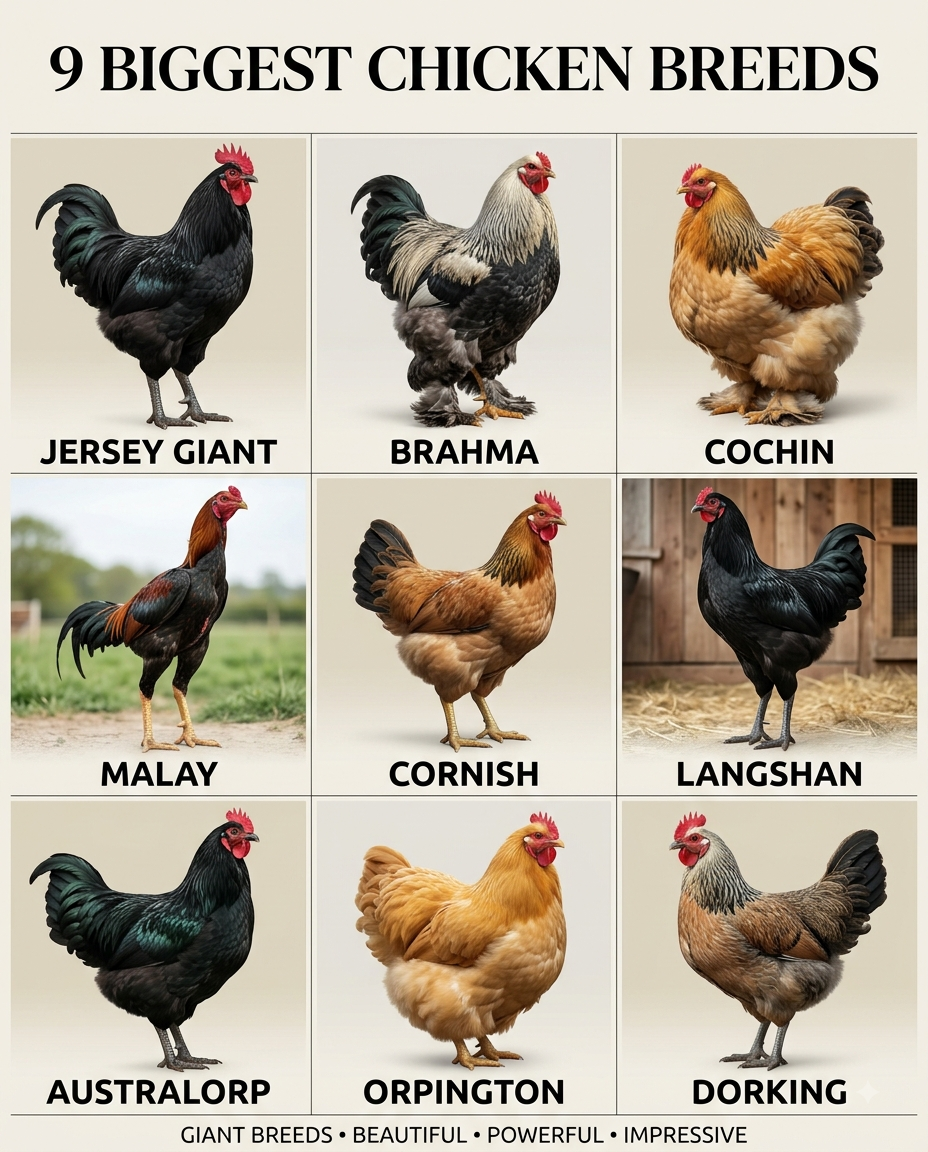
<p>The undisputed heavyweight champion of the poultry world is the Jersey Giant. Developed in New Jersey in the late 19th century, these birds were originally intended to replace the turkey. A mature rooster can weigh between <strong>13 to 15 pounds</strong>, while hens typically reach 10 to 11 pounds.</p>
<p>From a field experience perspective, the biggest mistake farmers make with Jersey Giants is treating them like commercial broilers. They are slow growers. While a broiler is ready in 6-8 weeks, a Jersey Giant needs 6 to 9 months to reach full frame. If you push them with high-protein concentrates too early, you risk leg weakness (perosis) because their heavy bones haven't calcified enough to support the sudden muscle mass.</p>
<h3>2. Brahma</h3>
<p>Often called the "King of All Poultry," the Brahma is one of the <strong>biggest chicken breeds in the world</strong> that thrives in cooler climates but requires careful management in Africa. Known for their feathered feet and pea combs, these birds are massive, with roosters reaching 10 to 12 pounds. According to the <a href="https://www.fao.org/3/v9898e/v9898e03.htm">FAO Animal Production and Health guidelines</a>, genetic diversity in breeds like the Brahma is essential for maintaining robust heritage stocks.</p>
<h3>3. Cochin</h3>
<p>Cochins are the "fluff-balls" of the giant world. They are heavily feathered from head to toe, making them appear even larger than they are. While they weigh around 10 to 11 pounds, their massive plumage can be a liability in humid regions like Lagos or Port Harcourt. Ectoparasites like sticktight fleas and mites love to hide in that thick down. Always keep <strong>Permethrin powder</strong> or Ivermectin drops on hand for monthly preventative treatments.</p>
<h3>4. Malay Chicken</h3>
<p>The Malay is the tallest of the <strong>biggest chicken breeds in the world</strong>, standing up to 30 inches high. Unlike the fluffy Orpington, the Malay is tight-feathered, muscular, and has a "gamey" look. In my field visits to traditional farms, I’ve seen Malay crosses used to improve the height and bone density of local "old English" strains. They are incredibly hardy but can be aggressive; do not house them in cramped quarters.</p>
<h3>5. Cornish (Jubilee/Dark Cornish)</h3>
<p>While the modern broiler is a Cornish-cross, the purebred heritage Cornish is a massive, broad-breasted bird. They have a very distinct "bulldog" stance. Roosters weigh about 10.5 pounds. Their meat density is unparalleled, but they are prone to heart failure if overfed in high-temperature environments. Ensure your pens have <strong>high-volume fans or open-sided ventilation</strong>.</p>
<h3>6. Langshan</h3>
<p>The Croad Langshan is a tall, graceful breed with a deep chest and a U-shaped back profile. They are excellent foragers and surprisingly good layers of dark brown eggs. For an African farmer, the Langshan is often more viable than the Cochin because they have less leg feathering, which reduces the risk of mud-clumping and foot infections like bumblefoot during the rainy season.</p>
<h3>7. Australorp</h3>
<p>The Australorp is the pride of Australia, famous for setting world records in egg production. However, they are also quite large, with roosters hitting 10 pounds. If you want a "big" bird that actually pays for its feed through egg sales, this is your best bet. They are significantly more heat-tolerant than the Jersey Giant.</p>
<h3>8. Orpington</h3>
<p>The Buff Orpington is a favorite for backyard enthusiasts. They are heavy, broad birds (8-10 lbs) with a very docile temperament. In a commercial setting, they are excellent "foster mothers" because they go broody easily. If your incubator fails, a few Orpington hens can save your season by sitting on clutches of eggs from more temperamental breeds.</p>
<h3>9. Dorking</h3>
<p>An ancient breed dating back to the Roman Empire, the Dorking is unique because it has five toes. They have short legs but very long, heavy bodies, often weighing 9 pounds. They are prized for their white meat and are one of the best foragers among the <strong>biggest chicken breeds in the world</strong>.</p>
<blockquote>
<strong>Pro Tip:</strong> When raising giant breeds in tropical climates, increase the floor space to at least 4.5 square feet per bird. Overcrowding leads to "heat pockets" which can kill a 12-pound Jersey Giant in under two hours during a 35°C afternoon.
</blockquote>
<h2>Management Challenges of Giant Breeds</h2>
<p>Raising the <strong>biggest chicken breeds in the world</strong> comes with a unique set of challenges that I often see novice farmers overlook. Much like the errors documented in <a href="https://farmtechbusiness.com/blog/rabbit-farming-mistakes">rabbit farming: 7 mistakes that kill your profits</a>, poultry giants require specialized care to reach their full potential.</p>
<ul>
<li><strong>Skeletal Support:</strong> Large breeds need a higher calcium-to-phosphorus ratio during their growing phase. Supplement with oyster shells or bone meal from week 12.</li>
<li><strong>Housing Height:</strong> For breeds like the Malay, your perches must be low to the ground. If a 12-pound bird jumps down from a 4-foot perch, the impact can cause leg fractures or keel bone cysts.</li>
<li><strong>Feed Conversion:</strong> These birds eat significantly more than a standard Leghorn. Expect a feed-to-meat ratio that is much higher; you are paying for the "mass" and "beauty," not necessarily efficiency.</li>
<li><strong>Parasite Management:</strong> Use <strong>Sevin dust</strong> or similar carbaryl-based powders specifically on the feathered legs of Brahmas and Cochins to prevent scaly leg mites.</li>
</ul>
<h2>Nutrition Strategies for Maximum Growth</h2>
<p>To get your birds to the top weights seen in the <strong>biggest chicken breeds in the world</strong>, you cannot rely on low-quality mash. During the first 8 weeks, use a <strong>22% protein Broiler Starter</strong>. From week 9 to week 20, transition to a "Grower" mash with 18% protein but supplemented with vitamins. High-quality nutrition is non-negotiable. Research from the <a href="https://poultry.extension.org/articles/poultry-management/managing-backyard-flocks-to-prevent-pests/">University of California Agriculture and Natural Resources</a> emphasizes that proper diet and biosecurity are the foundations of large-scale poultry success.</p>
<h3>Mistakes to Avoid</h3>
<p>The most common mistake is "Pushing" the birds. Farmers often try to make a Jersey Giant reach 15 pounds by 4 months using growth enhancers. This is a death sentence. The heart and lungs of these giant breeds need time to catch up with their muscle mass. Slow and steady wins the race with heritage giants.</p>
<h2>Conclusion</h2>
<p>Raising the <strong>biggest chicken breeds in the world</strong> is a rewarding venture that combines heritage preservation with high-value meat production. Whether you choose the towering Malay or the massive Jersey Giant, success lies in understanding that these are not standard commercial birds. They require space, specialized nutrition, and a long-term commitment to their growth cycle.</p>
<p>Are you ready to transform your farm into a hub for world-class livestock? Whether it's poultry, fish, or rabbits, we provide the technical insights you need to stay profitable.</p>
<p><strong>Join Farming Tech & Business today for more expert guides, livestock management tips, and agricultural secrets that the "pros" don't want you to know!</strong></p>