<h1>Male vs Female Broilers: Which One Do Your Customers Really Prefer?</h1>
<p>In my 15 years of managing poultry farms across Nigeria, from the humid belts of Ogun State to the cooler plains of Jos, I have realized that many farmers make the mistake of focusing solely on weight without considering the market demand. When deciding between <strong>male vs female broilers</strong>, the answer isn't always about who grows faster. It is about who pays the bills faster. In the commercial broiler industry, understanding the sexual dimorphism in growth rates and carcass quality is the difference between a 15% profit margin and a 40% one. In this guide, I will break down the biological and economic differences between male and female broilers to help you choose the right stock for your specific market.</p>
<h2>The Biological Difference: Why Gender Matters in Broiler Farming</h2>
<p>From a purely biological standpoint, male broilers are built for speed and mass. If you are raising popular breeds like the Cobb 500 or Ross 308, you will notice a divergence in growth as early as day 14. Males have a higher metabolic rate and a more efficient Feed Conversion Ratio (FCR). In a standard 6-week production cycle, a <strong>male vs female broilers</strong> comparison usually shows the male reaching a live weight of 2.6kg to 2.8kg, while the female often lags at 2.1kg to 2.3kg on the same diet.</p>
<p>According to the <a href="https://www.fao.org/poultry-production-products/production/en/">Food and Agriculture Organization (FAO)</a>, poultry meat production efficiency is heavily dictated by genetic potential and sex-separate feeding. Females tend to deposit fat earlier than males. While this makes their meat more tender and succulent, it also means they require more energy per kilogram of weight gain in the later stages (weeks 6-8) compared to their male counterparts.</p>
<h2>Understanding Customer Preferences: The "Live Bird" vs. "Processed" Market</h2>
<p>Before you place your next order for day-old chicks (DOCs), you must identify your end-user. In the Nigerian context, we have two distinct markets that view the <strong>male vs female broilers</strong> debate differently:</p>
<ul>
<li><strong>The Event/Festive Market (Live Bird):</strong> These customers want "size." They want a bird that stands tall and looks impressive in a cage. For weddings, Christmas, or Sallah, males are the undisputed kings. A 4kg male broiler at 9 weeks is a premium product.</li>
<li><strong>The Hotel and Restaurant (HORECA) Market:</strong> These customers often prefer uniformity. They buy processed birds. If a chef is preparing "quarter chicken," they need every leg and breast to be roughly the same size for plate consistency. Females are often preferred here because they offer a more compact, fleshy breast and uniform "lapping" (thigh/drumstick) sizes.</li>
</ul>
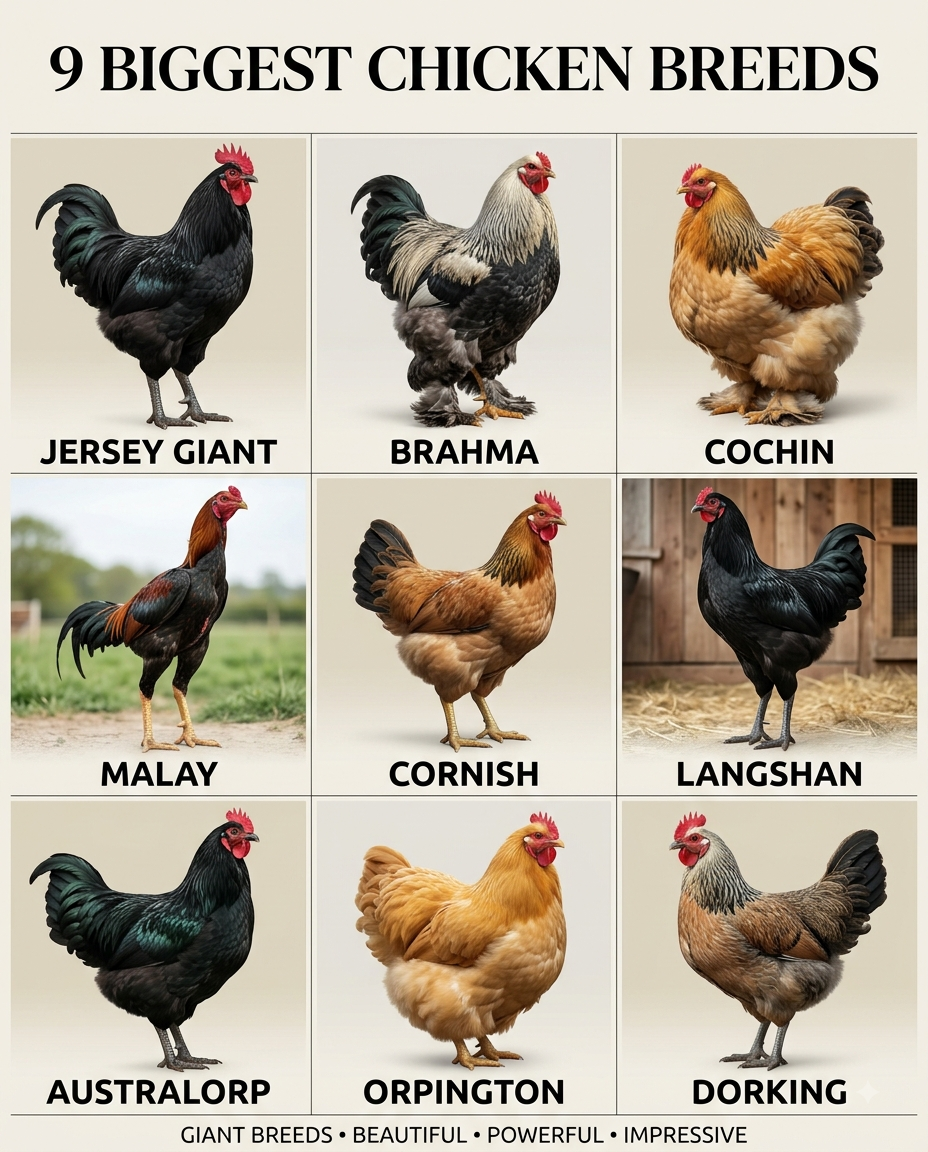
<p>If you are looking to scale your livestock venture, you might also be interested in exploring other high-growth options. Check out my guide on <a href="https://farmtechbusiness.com/blog/9-biggest-chicken-breeds-in-the-world-a-professional-farmer-s-guide-msom3pso">9 Biggest Chicken Breeds in the World</a> to see how broilers stack up against heritage giants.</p>
<h2>Growth Rates and Feed Conversion: The Cold Hard Numbers</h2>
<p>Let’s talk numbers. In my experience with Nigerian-milled feeds like Topfeed or Hybrid, a male broiler will consume roughly 4.5kg of feed to reach 2.5kg in 42 days. A female might consume 4.2kg but only reach 2.1kg. This means the male has a superior FCR. </p>
<h3>Male Performance (Week 1-6)</h3>
<ul>
<li>Average Weight Gain: 55-65g per day.</li>
<li>Target Weight at 6 Weeks: 2.5kg - 2.8kg.</li>
<li>Conformation: Longer legs, larger frames, less abdominal fat.</li>
</ul>
<h3>Female Performance (Week 1-6)</h3>
<ul>
<li>Average Weight Gain: 45-52g per day.</li>
<li>Target Weight at 6 Weeks: 2.0kg - 2.2kg.</li>
<li>Conformation: Rounder breasts, shorter legs, higher fat content (better flavor).</li>
</ul>
<blockquote><strong>Pro Tip from the Field:</strong> If you are raising a mixed flock (straight-run), try to "sex" them at week 4. Separate the males and females if space permits. This allows you to give the females a slightly lower protein, higher energy finisher to boost weight without wasting expensive protein that they can no longer efficiently convert into muscle.</blockquote>
<h2>The Cost of Sexed Chicks vs. Straight-Run</h2>
<p>In Nigeria and much of Africa, most hatcheries sell "straight-run" chicks (a 50/50 mix of male and female). However, some premium hatcheries offer sexed chicks. You will pay a premium—often 15% to 25% more—for a batch of 100% males. Is it worth it? </p>
<p>If your market is the "Old Layer" replacement market or you are selling to high-end caterers who want massive 3kg+ birds, then paying for sexed males is a smart investment. If you are selling to local "Mama Put" (small eateries), the mixed flock is fine, as they will take the smaller females for a lower price and the larger males for a higher price.</p>
<h2>Disease Resistance and Mortality: Is One Sex Hardier?</h2>
<p>In the <strong>male vs female broilers</strong> comparison, I have observed that males are generally more susceptible to "Ascites" (water belly) and Sudden Death Syndrome (SDS) because of their rapid heart rate and massive muscle growth. Females tend to be slightly more resilient to heat stress because of their smaller body mass. </p>
<p>Regardless of sex, your vaccination schedule must be airtight. I always recommend the <strong>Gumboro (IBD)</strong> vaccine at Day 7 and Day 14, and <strong>Lasota (Newcastle)</strong> at Day 21. For males, ensure your ventilation is 100% perfect. A male broiler's heart is under immense pressure to support its fast-growing frame; any drop in oxygen levels will result in mortality.</p>
<h2>Diversifying Your Farm for Maximum Profit</h2>
<p>While poultry is a fast way to generate cash flow, many smart farmers are diversifying. While you weigh the pros and cons of <strong>male vs female broilers</strong>, consider the lower feed costs of other livestock. For instance, you can learn <a href="https://farmtechbusiness.com/blog/how-to-start-rabbit-farming-business-in-nigeria-in-2026-msm45qx4">How to Start Rabbit Farming Business in Nigeria in 2026</a> to supplement your poultry income. Rabbits often have a more stable market price compared to the fluctuating costs of broiler maize and soy.</p>
<p>Research from <a href="https://www.ars.usda.gov/">United States Department of Agriculture (USDA)</a> agricultural research services suggests that integrated farming—using poultry litter to fertilize crops or feed other livestock—significantly reduces the overhead costs of commercial broiler production.</p>
<h2>Which One Should You Choose? Final Verdict</h2>
<p>To succeed in the <strong>male vs female broilers</strong> debate, you must align your production with your buyers. </p>
<h3>Choose Males if:</h3>
<ul>
<li>You sell to the live bird market during festivals.</li>
<li>You want the fastest possible turnover (4-5 weeks).</li>
<li>You have high-quality, high-protein feed available.</li>
</ul>
<h3>Choose Females (or Mixed) if:</h3>
<ul>
<li>You sell processed "cut-up" chicken to supermarkets.</li>
<li>You sell to restaurants that want uniform, smaller portions.</li>
<li>You want to minimize the risk of Sudden Death Syndrome in hot climates.</li>
</ul>
<h2>Conclusion</h2>
<p>Understanding the nuances of <strong>male vs female broilers</strong> is what separates a professional farmer from a hobbyist. While males offer the allure of massive size and better feed conversion, females provide the uniformity and meat quality that many processors crave. My 15 years in the field have taught me that the best strategy is often a 70/30 split favoring males if you are selling live, or a 100% sexed female flock if you are supplying a specific fast-food franchise. Watch your birds, record your feed intake daily, and always listen to what your customers are asking for at the point of sale.</p>
<p>Are you ready to take your poultry business to the next level? <strong>Join Farming Tech & Business</strong> today for exclusive insights, field-tested guides, and a community of professional farmers dedicated to making Africa the world's breadbasket. Subscribe to our newsletter now!</p>